



Friday, March 28, a disturbing image emerged on the Santa Monica Pier in Southern California, leaving onlookers surprised. The washed-out lion laid there in a near-comatose state with a grey hue to its skin, in critical condition. Later that day, on the opposite side of the pier, another sea lion was spotted, sick, according to The New York Times. Scientists and marine biology experts are testing the waters and tracking the sea lions to pinpoint the cause of death and illness arising in these mammals within the sea, according to abc.com.
Expert Mr. Adam Fox, who works with the sea mammal rescue group, assigned the sea lions tracking numbers later that week after discovering the ill sea lions, so that they could follow their movement in the water. Along the Southern California coastline, reaching from San Diego to Santa Barbara, researchers have found hundreds of sea mammals, including dolphins and seabirds, washing up on the shore dead or seriously ill. By tracking the sea lions, researchers hope to pinpoint the cause of this illness within the waters, according to The New York Times.
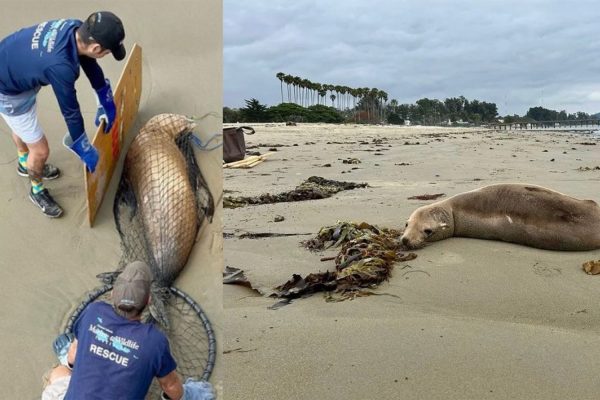
Later on, after studying the animals in water for some time, marine biologists found out that the disease is caused by a neurotoxin an algal bloom produces. The toxin is relatively harmless to fish, but deadly to sea mammals, according to The New York Times. Ms. Ruth Dover, a co-founder and managing director of Channel Islands Marine and Wildlife Institute, spoke about the death toll of the wildlife, according to CNN.
“It’s like the waves of a tsunami keep washing over our local beaches with even more sea lions and dolphins suffering from domoic acid,” Ms. Dover said, according to CNN. “We thought last year’s domoic acid event affecting Santa Barbara and Ventura was tragic, but this year’s event is even more horrific.”
This algae is not uncommon in the state of California. However, the amount of toxic acid the blooms have been releasing has surprised scientists, according to The New York Times. Marine biologists believe that due to wind-driven upwelling in the deep ocean, increased levels of nutrients are providing fuel to the marine ecosystem, according to fisheries.noaa.gov.
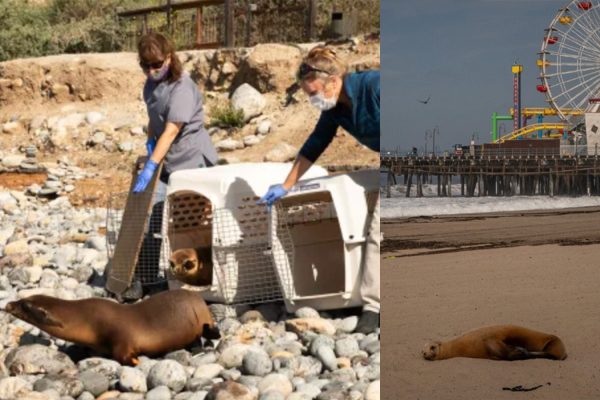
In response to the current outbreak, the SeaWorld San Diego rescue team has doubled its staff. Ms. Alyson Tockstein, Upper School Science Teacher, discussed why the more harmful algal blooms are happening and how this relates to the sea lion crisis.
“This has a lot to do with how the climate is changing,” Ms. Tockstein said. “Large algal blooms occur when there is an excess of nutrients in the water. This can happen naturally through upwelling (a process that brings sunken nutrients up from the deep) or runoff. Increased use of pesticides, fertilizers, and other stormwater runoff can contribute to increased levels of nutrients entering the water. Many of these harmful algal species thrive in warm slow slow-moving water. The increased sea temperature can affect the natural movement of the ocean, causing it to slow.”
Featured Image by Elin Eaton ’27
