


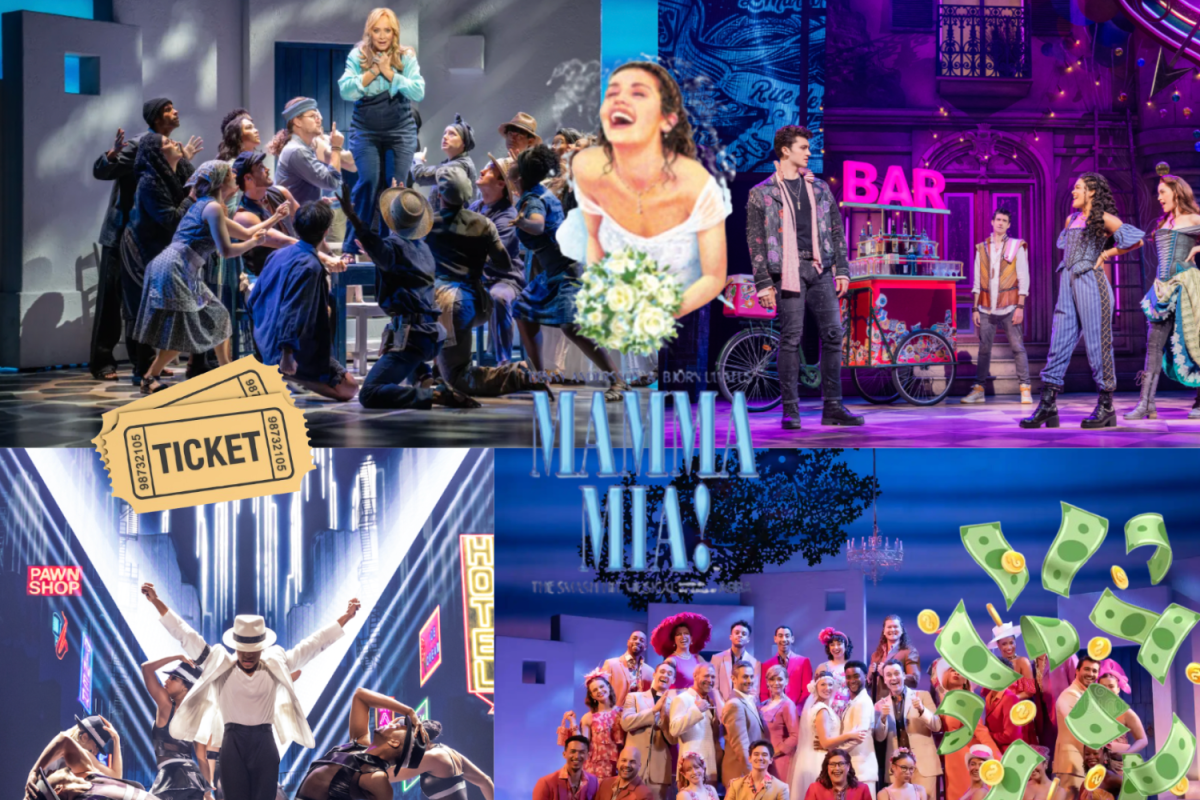
After ten years, Mamma Mia! made its return to Broadway at the Winter Garden Theatre in New York City August 14, where it will run through February 1, 2026. Ms. Catherine Johnson’s Mamma Mia! made its Broadway debut in 2001 and ran for 14 years. The 2025 revival of Mamma Mia! has sold out most performances so far and averages over $1,600,000 in revenue per week, according to usatoday.com. Broadway relies on familiar jukebox musicals, like Mamma Mia!, for financial success. These productions typically thrive on Broadway due to audience recognition, according to oberlinreview.org.
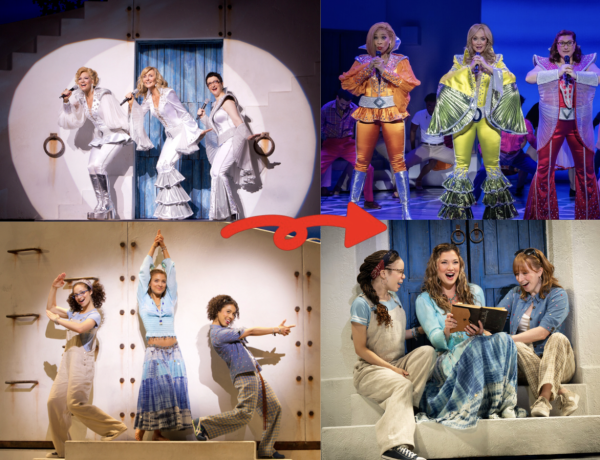
Mamma Mia! had previous success in recouping its $10 million investment during its first Broadway run, according to playbill.com. Thus, producers brought it back to Broadway, as recent musicals are struggling to recoup on investment. Since COVID-19, only three musicals have recouped on investment, including & Juliet, Six, and MJ, according to The New York Times. Of those, & Juliet and MJ are jukebox musicals, a type of musical that features preexisting and well-known music rather than an original score.
Broadway plays are typically cheaper to produce, and in recent times, have brought in large audiences due to celebrity casts and shorter runs. However, Broadway relies on the longevity of musicals for revenue, according to The New York Times. The Broadway industry depends on popular jukebox musicals specifically for financial success. Miss Michaela Gorman ’05, Upper School Theatre Teacher and Director of Theatrical Productions, shared her input on the current economic climate of Broadway and the impact of jukebox musicals, specifically Mamma Mia!, on the industry.
“With the economic landscape of Broadway in such an uncertain state, I think that something like a jukebox musical with familiar songs and a level of audience recognition contains a built-in appeal to producers who are looking to minimize risk,” Miss Gorman said. “When you look to hit jukebox musicals like Mamma Mia!, which is among the top ten longest running Broadway musicals of all time, I think there is a precedent set. Long-running hit shows do provide a level of stability for the industry. They employ a lot of people, they recoup their investment, and then become profitable, allowing them to make financial space for other productions that are perceived as ‘riskier’ to happen.”
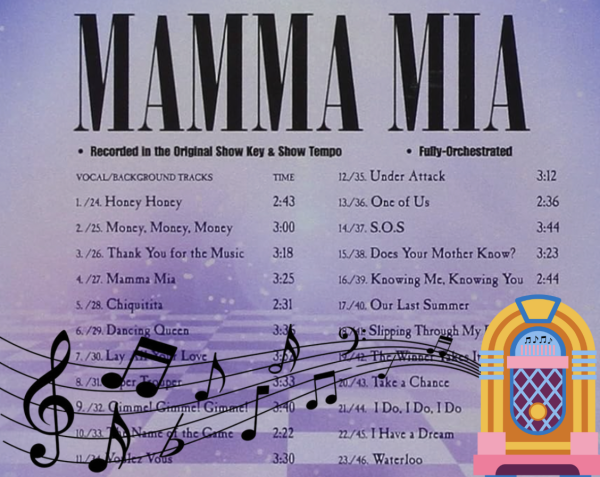
Widely-loved jukebox musicals and film-to-stage adaptations are abundant on New York City stages currently. Although these can be fun and familiar shows to attend, their dominance leads to a decrease of originality in the industry as a whole. In the past 30 years, around 82 percent of the musicals on Broadway have been adaptations, according to the oberlinreview.org. Similarly, jukebox musicals have become significantly more prevalent on Broadway. Their recoupment rate rose from 25 percent to 32 percent in the 2024 season, and it continues this trend into the 2025 season as producers look to well-known and reliable options to reassure investors, according to broadwayworld.com. This sets up the industry to have less diversity in creative output and audience attendance. Miss Gorman discussed the importance of keeping jukebox musicals on Broadway while acknowledging their tendency to create a lack of originality within the industry.
“I think that jukebox musicals can be and have been hugely innovative and creative, and that they have contributed both creatively and economically to the success of Broadway theatre in the past 25 years,” Miss Gorman said. “[…] I also think there can come a point of oversaturation where there is just a lot of demand for very similar pieces of art. I think a healthy theatre landscape is one that also has room for original works and allows for a level of artistic risk-taking, so I do hope that we will see that balance in the future and that the economics of theatre, especially at the highest levels, will allow for this.”
Mamma Mia!’s consistent popularity since its debut on Broadway, with film remakes and sequels created since 2001, makes its revival dependable compared to producing an original musical, according to The New York Times. Mamma Mia! earned $261,796 on its first day of previews. The production placed within the top five grossers in its first full week on Broadway, bringing in $1,570,000. In addition, Mamma Mia! is playing in one of Broadway’s largest theatres, the Winter Garden Theatre, indicating producers’ confidence in a successful audience turnout and investment stability, according to playbill.com.
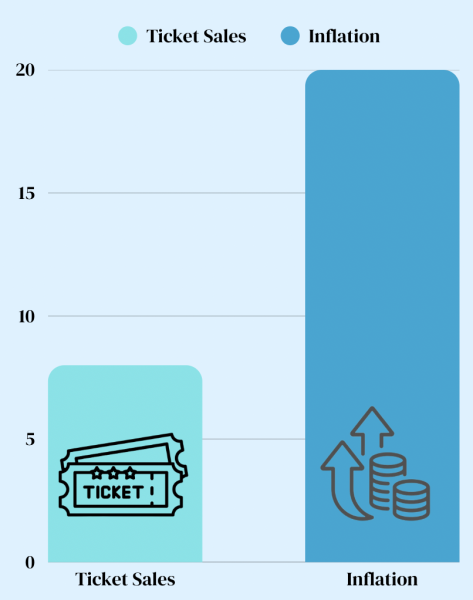
While crowds tend to follow popular jukebox musicals that are familiar and predictable, these musicals aren’t a permanent solution to the economic struggle Broadway faces today. Ticket sales balance out money lost in production. However, ticket prices haven’t risen in accordance with the growing costs of producing musicals, according to The New York Times. Although ticket sales continue to rise, it is at a rate that falls behind that of inflation, according to kendavenport.com.
The consistent success of Mamma Mia! is due to its popularity among audiences of all ages, according to theguardian.com. The combination of well-known music by the band ABBA and feel-good energy allows Mamma Mia! to prosper on Broadway, making it a safe bet for the industry. Sacred Heart Greenwich sophomore Eleanor Kelleher viewed Mamma Mia! September 21. Eleanor commented on her experience watching Mamma Mia! and her opinion on the importance of jukebox musicals to Broadway.
“[While watching Mamma Mia!], the actors were great [and] obviously the music was very fun,” Eleanor said. “I do think that it is overall a good idea to keep these familiar shows on, but I think there definitely needs to be a mix. I [believe] having new and different shows is very important, and people do want to see that, [but] if they don’t have [well-known shows] and it means nobody’s going to see a Broadway show then that’s [definitely] worse. I [believe] these familiar shows are [beneficial to Broadway as long as] they aren’t overcrowding.”
Featured Image by Ruby Boeding ’28