



The “book adaptation boom,” a term defining the mass number of movies adapted from novels, has become a noticeable trend in the film industry. In fact, over 70 percent of the top 20 grossing movies in the world are based on literary works. The number of such movies has also increased every year in Hollywood and other industries, according to medium.com. Romance novels, in particular, are taking over both bookshelves and movie screens. Novels from bestselling authors like Mrs. Colleen Hoover, with her emotional dramas, to Ms. Emily Henry, with her feel-good stories, are finding new life on the big screen. Romance novels are turning a new page as they make their way onto the big screen and become major film sensations, according to barrowgroup.com.
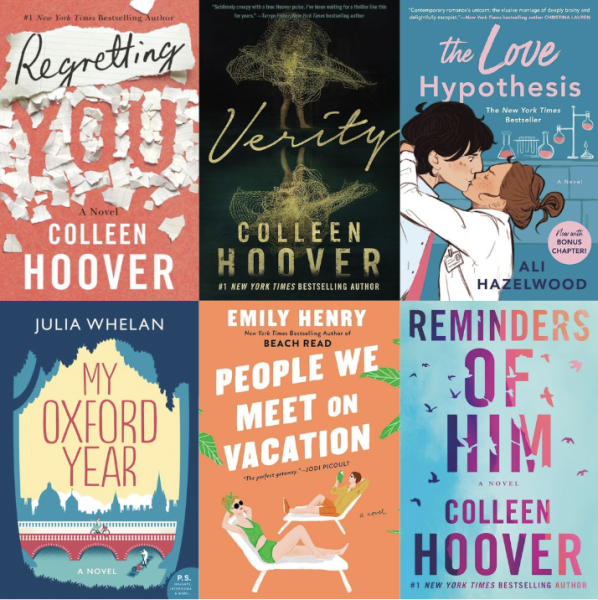
In a society dominated by social media, audiences search for stories that are emotional and relatable. Over the past several years, the main demographic for the romance genre has expanded to include women ages 18 to 54. Ten years ago, however, the audience mainly consisted of women between 35 and 54. Social media has allowed younger generations, especially Generation Z (Gen Z), to embrace romance novels more than ever. Social media trends, such as BookTok, online fandoms, and book influencers make these novels more appealing to wider audiences. A social media hashtag, #BookTok, has grown in popularity, contributing to 20 percent overall growth in author-driven sales, according to accio.com. Moreover, TikTok has helped book sales skyrocket, with sales for authors whose books have gone viral on the platform reaching 12.5 million in 2022, according to npr.org. For this reason, adaptations from novels often come with a built-in audience, as movies based on novels attract preexisting fans who are eager to see their favorite characters come to life. This fan base automatically ensures a level of interest and financial success before the movie even hits the theaters, according to barrowgroup.com. Mrs. Olivia Kolenberg, Upper School Librarian, discussed the noticeable checkout trends in the Sacred Heart Greenwich library once producers adapt a popular romance novel for the screen.
“We actually had to get extra copies of The Summer I Turned Pretty at the start of the school year because so many students wanted to read the books after watching the show,” Mrs. Kolenberg said. “[M]ovie or [television] adaptations that become popular, like The Summer I Turned Pretty, tend to increase student interest in reading the books. It happened a lot with the other adaptations from this summer, [like] We Were Liars and the My Life with the Walter Boys series. It [also] happened with the other series Jenny Han wrote, To All the Boys I Loved Before, when the movies came out a few years ago, and when the first Hunger Games prequel movie came out. [This year, I started the pom pom voting], and one of the votes I did was ‘watch the movie or read the book first’ and I heard a lot of funny conversations as people debated. One comment was that sometimes you might not know that a show or movie was originally a book, so the adaptation was what originally sparked their interest.”

Streaming platforms, such as Netflix, Hulu, and Amazon Prime, have recently invested in romance movies and shows. Adapting books into films and series are low-risk, high-reward, cost-effective projects with steady audiences and fanbases. Additionally, streaming platforms often look for a strong international appeal. Romance novels often reach audiences around the world. Therefore, since streaming platforms are global businesses, book to film adaptations can be smart financial investments. For example, The Witcher, based on Polish author Mr. Andrzej Sapkowski’s books, became a worldwide hit on Netflix, according to readerscloset.com. In addition, United States (US) subscription video‐on‐demand services increased the number of romance-movie hours in their catalogs from 7,300 hours in 2023 to nearly 8,900 hours by the end of 2024. This highlights how major platforms are expanding their romance-related content, according to ampereanalysis.com.
Notably, the romance book industry experienced significant growth in the US in 2024. US print romance sales reached 51 million units, a 24 percent increase from 2023. Moreover, romance novels generate around $1.44 billion annual revenue, making romance the highest-earning genre of fiction. In addition to its high earnings, in 2024, 10.6 percent of 18 to 24 year olds in the US reported that romance is their favorite genre, making it the second most favorite genre among this demographic, according to accio.com. This growing popularity is what catches the attention of film producers and streaming platforms. Mrs. Kolenberg touched on why she thinks romance novels are so popular, especially among teens and young adults.
“I think it stems from romance novels and love stories being a universal, happy experience,” Mrs. Kolenberg said. “Most people are always going to enjoy watching two people fall in love. Books in general can be a great form of escapism, to get away from whatever your daily stressors are, but romances are a guarantee of a happy ending which I think people are more prone to seek out, especially if they might not be a big reader.”
Featured Image by Lilia Newman ’27
