



In 2009, Mr. Mark Zuckerberg’s Facebook introduced the first personalized social media algorithm. An algorithm is a set of rules that sort and rank content to create a unique, personalized feed tailored to what users view and interact with the most. This innovation revolutionized social media by replacing the simple chronological feed that just showed the most recent posts towards the top. With the surge in the use of Artificial Intelligence (AI) on platforms such as Facebook, Instagram, TikTok, YouTube, and Twitter, these algorithms have drastically changed how people live, both online and in person, according to bbc.com. However, the deeply embedded algorithms that now shape users’ daily lives pose a dangerous threat. The tailored content shapes how people perceive the world, and this content often promotes just a single perspective, according to The New York Times. Although algorithms promote content based on user engagement, it is harmful for users to view content that only aligns with their views, as it only reinforces the users’ outlooks on the world. Thus, users must actively search for alternative perspectives to avoid only seeing one side to every story.
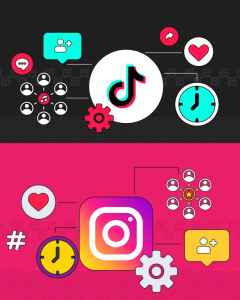
Since algorithms feed users more of the same content that they already engage with, they often trap unaware individuals in their own isolating bubbles, according to wsj.com. Rather than exposing users to unique ideas or diverse perspectives, social media surrounds its users with like-minded people, thoughts, and opinions. This confirmation bias reinforces their own beliefs, further distancing them from reality.
Even though biased algorithms can certainly benefit content creators and companies by boosting visibility and curating a wider audience, the effects on users are far less favorable. Moreover, influencers, who make a living from falsely displaying their lives on social media, can lead to viewers having lower self esteem and higher rates of anxiety and depression, according to nih.gov. Dr. Linda Mayes, the chair of the Yale Child Study Center, shared how social media algorithms can be detrimental to mental health, according to yalemedicine.org.
“The social media algorithms are built to promote whatever you seem interested in,” Dr. Mayes said, according to yalemedicine.org. “If a teen searches for any kind of mental health condition, such as depression or suicide, it’s going to feed them information about those things, so soon they may begin to think that everyone around them is depressed or thinking about suicide, which is not necessarily good for mental health.”
In addition to spreading a single narrative, algorithms influence mental health by polarizing users and creating a false sense of reality, particularly in teenagers, according to The New York Times. Mr. Chris Murphy, the junior United States (US) senator from Connecticut, visited a group of high school students in the spring of 2023 to discuss social media and mental health. He shared how his discussion with the students made him question the unavoidable impact of these algorithms on social media users, according to The New York Times.
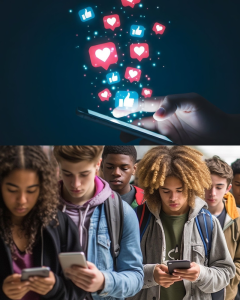
“There are numerous problems with children and adolescents using social media,” Mr. Murphy said, according to The New York Times. “But the high schoolers with whom I met alerted me to an even more insidious result of minors’ growing addiction to social media: the death of exploration, trial and error and discovery. Algorithmic recommendations now do the work of discovering and pursuing interests, finding community and learning about the world. Kids today are, simply put, not learning how to be curious, critical adults — and they don’t seem to know what they’ve lost. […] It is not a coincidence that teenage rates of sadness and suicide increased just as algorithmically driven social media content took over children’s and adolescents’ lives.”
Ultimately, raising awareness about social media’s algorithms and how they work may improve users’ mental health and enhance analytical reasoning. Challenging one’s own perspective, especially when the algorithm agrees with it, can be a strenuous task, but it is essential for building community and fostering one’s critical consciousness.
Featured Image by Blaire Williamson ’27
