



Fashion shows often set the tone for what society deems to be beautiful, yet, the bodies on runways rarely reflect the women sitting in their audiences. The fashion industry continues to glorify a single unattainable image of beauty that often excludes the diversity of sizes found in the real world. The average clothing size for women in the United States (US) is between a 16 and an 18, according to sumissura.com. In contrast, the average size of a model in the US is between a 0 and a 4, according to modnet.io. This stark difference highlights how the fashion industry showcases unachievable body standards.
Experts say that this gap contributes to rising concerns about self-image, with nearly 78 percent of teenage girls reporting dissatisfaction with their bodies in relation to media standards, according to now.org. The fashion world continues to promote body standards that most women do not and cannot attain, creating an aesthetic ideal that is impossible for the majority of its own consumers. This disconnect does not just shape how clothes appear on runways, but how millions of women and girls view their bodies. Ultimately, the fashion industry’s portrayal of beauty not only distorts societal expectations, but also harms the confidence and mental health of young women. This imbalance in representation shows that the industry’s standards continue to fuel insecurity rather than promote inclusivity.
Throughout the early 2000s, high fashion runways typically only showcased the thinnest models. Because of this, the trend of hiring slimmer models spread to even the more inconspicuous and unknown brands, according to theguardian.com. However, as the industry ushered in a new decade, many consumers began to push back against the unhealthy and unattainable body standards that perpetuated on the runways. Some credit this to a rise in feminism that occurred during the mid-2010s, sparking the Me Too Movement and calling for body positivity within fashion, according to vogue.com. However, ten years after this movement, many fashion houses seem to be returning to their initial preference of thinner models, with the exception of a handful of mid-size women to remain non-discriminatory, according to bbc.com.
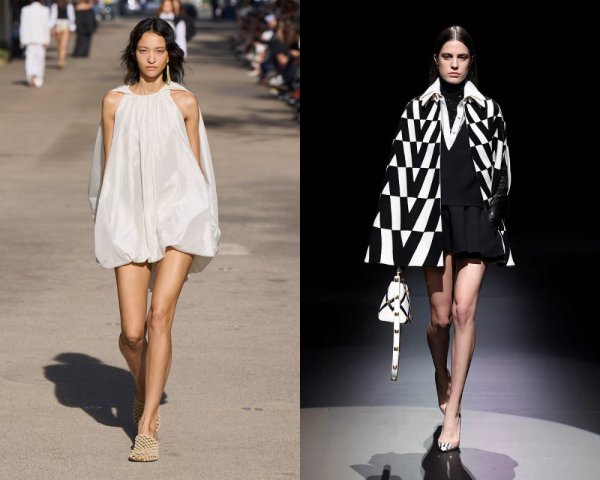
Because leading fashion houses such as Chanel, Dior, Balenciaga, and Saint Laurent have begun consistently platforming the thinnest models, the rest of the industry will follow their lead, according to fashionnetwork.com. High fashion functions as both an artistic space and a cutthroat commercial market. Therefore, the most influential brands elevate aesthetics that will quickly become the industry standard. These industry giants set the visual agenda for each season by shaping runways, magazine editorials, and advertising campaigns. In response, smaller labels adjust their casting to stay aligned with what sells, according to bostonbrandmedia.com. When thinness resurges among top luxury brands, it triggers a ripple effect of agencies scouting and prioritizing slimmer models, stylists curating concepts that complement a smaller silhouette, and emerging designers following the trend to avoid appearing outdated, according to runwaylive.com. In this way, the body ideals of a handful of elite fashion houses exert disproportionate control over the entire modeling ecosystem.
Top fashion houses claim that they have begun moving away from showcasing a more diverse range of bodies because displaying thinner models is what brings in the most revenue, according to bbc.com. Top fashion houses have their own interpretation of what they believe their consumers want and are constantly trying to cater to that. Ms. Emma Davidson is a fashion features director at Dazed, and she shared her opinion on the upward trend of ultra-thin models in fashion, according to vogue.com.
“I don’t think thinness ever became less compelling for brands.” Ms. Davidson said, according to vogue.com. “I guess body diversity was just a trend, and as soon as one or two have gone back to what they were doing before, everyone has followed. Budgets are being cut. We’re seeing that across the runways: stripped-back sets, stripped-back invites, stripped-back ad campaigns. I think money is so tight that they can’t be bothered to think about [size-inclusive casting].”

Due to the rapid development of the internet and other social media platforms, fashion has widened its sphere of influence over young people. Fashion has become more accessible to the masses, specifically young people, which exposes youth to runways and magazines that are saturated with body types that are unattainable for the majority of the population. This overexposure of harmful body standards to young girls can lead to mental health issues, such as eating disorders or depression, according to nih.gov. Around 5.5 to 17.9 percent of young women in the US suffer from eating disorders, with recent increases in prevalence reported by females ages 15-19, according to nih.gov. Ms. Mariana Merino is currently studying at the Universidad Europa de Madrid in the school of Sports Sciences, according to nih.gov. She shared her opinion on the effects of unattainable body standards on young women.
“This relentless self-surveillance consumes significant cognitive and emotional resources, detracting from one’s ability to engage fully in life’s broader aspects, such as personal achievements and relationships,” Ms. Merino said, according to nih.gov. “The psychological toll is considerable, with individuals experiencing chronic shame and anxiety over their inability to meet culturally constructed beauty standards. These emotions can escalate to more severe mental health issues, including eating disorders and depression, and may also have somatic consequences, such as increased cardiovascular risk due to sustained stress and anxiety.”
As conversations around representation grow, the fashion industry has an opportunity to reconsider the standards that it promotes. Showcasing a wider range of body types on runways would not just reflect reality more accurately, but it would signal a shift toward a culture that values inclusivity over unattainable ideals. Consumers and designers alike have a role to play in that shift, and recognizing the gap between real bodies and runway norms is an important step toward closing it.
Featured Image by Catherine Ononye ’27
