


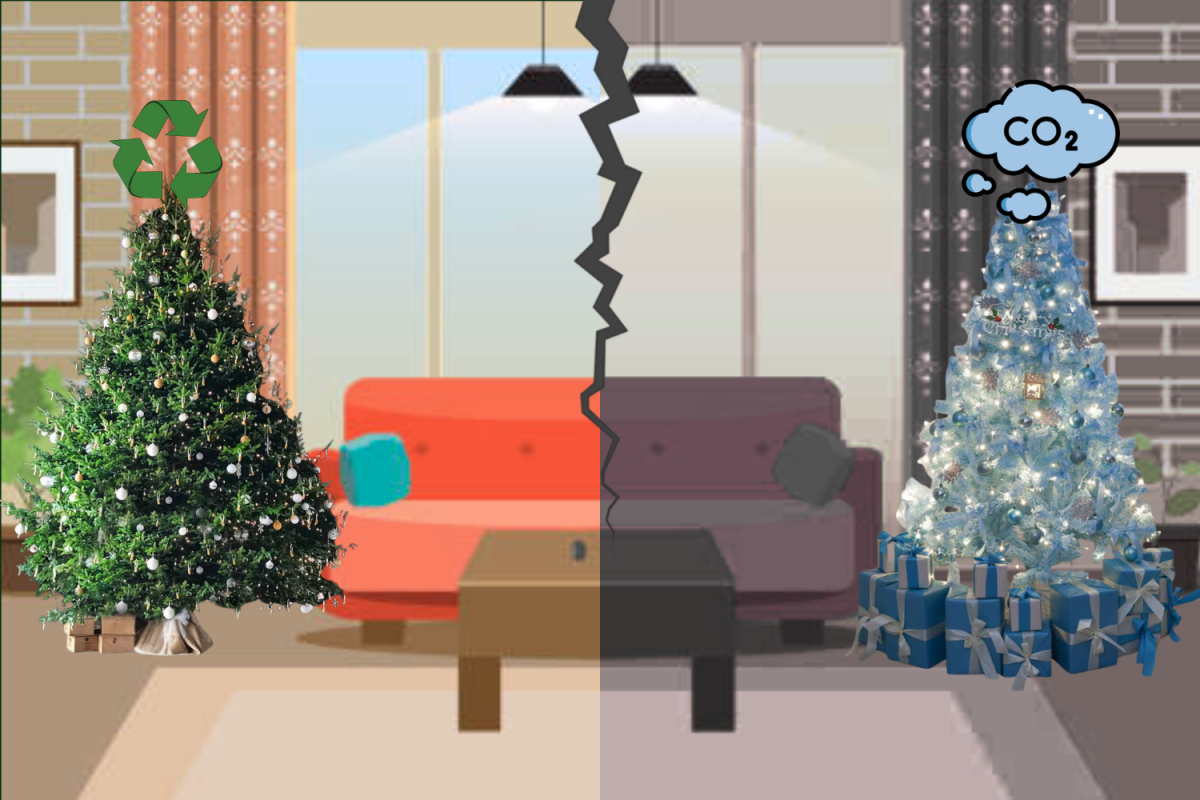
The tradition of buying a Christmas tree is a prominent pillar of holiday culture in the United States (US). However, in recent years, consumers have begun to stray from buying classic, authentic Christmas trees and have started to purchase the more accessible option of artificial Christmas trees. The authentic Christmas tree market is declining as artificial trees become more popular within the US. The natural Christmas tree industry has been slowly declining over for the past 40 to 50 years, according to CNN.
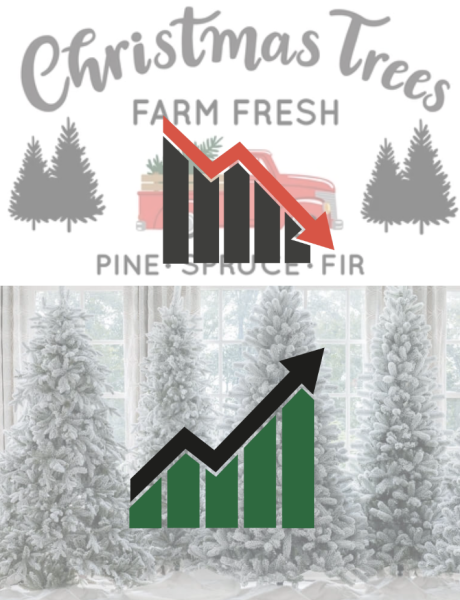
Artificial Christmas trees have made their impact on the Christmas tree market. One national survey projects around 83 percent of American households to have an artificial Christmas tree this season, according to christmastreeassociation.org. Although fake Christmas tree sales are increasing, their environmental effects do not align with their popularity. A singular fake tree that is only two meters long generates a carbon footprint of about 40 kilograms, according to sustainabilitymag.com. This trend of buying fake Christmas trees has been increasing for over a decade. Consumers continue to prefer artificial Christmas trees despite their negative effect on the environment, according to christmastreeassociation.org.
A major risk for Christmas tree farms is projecting future sales, as it takes around seven years to grow a Christmas tree. Anticipation for future sales forces farmers to make the decision of whether to plant less trees multiple years in advance. After the 2008 financial crisis, farms planted less Christmas trees and this decrease in production of authentic Christmas trees is hitting Oregon especially hard, since the majority of Christmas tree farms are located there. Between 2005 and 2020, the number of Christmas tree farms in Oregon dropped from 1,590 to only 490, according to CNN. As of 2023, Oregon’s largest Christmas tree farms have seen a 45 percent drop in sales and their smallest farms have seen an 80 percent drop in sales, according to capitalpress.com. Christmas tree farms attempted to sell Christmas trees at a lower cost than it takes to produce them, but that system was not viable. Additionally, 27 percent fewer Christmas trees were cut down in 2017 than 2002 nationwide, reflecting the slow decline of the authentic Christmas tree market, according to CNN.
While real Christmas trees are a holiday classic, the benefits of artificial trees are noteworthy. They are easily attainable, cost-effective, and can last for many years. Artificial Christmas trees are the easier option regarding upkeep and arrangement. Another benefit of buying an artificial Christmas tree is the variety of trees one can choose from, catering to all buyers, according to christmastreeassociation.org.
Although purchasing fake Christmas trees appears to be more efficient, it also has a multitude of negative consequences. US residents buy around ten million artificial Christmas trees each year, and companies ship around 90 percent of artificial Christmas trees overseas from China. The production and transportation of artificial trees results in high levels of carbon emission into the atmosphere. Additionally, the majority of artificial trees end up in landfills because they are not recyclable, according to nature.org. Ms. Margaret Vondermeden, Mustard Seed Program Teacher, shared her thoughts on the influx of Americans purchasing fake Christmas trees.
“Many artificial Christmas trees are manufactured overseas and shipped long distances, which requires significant resources,” Ms. Vondermeden said. “I was surprised to learn that the majority of Americans now choose artificial trees over live ones. As I see it, concerns about fallen needles may reflect increasingly busy lifestyles.”
When someone buys a real Christmas tree, they are not only choosing a more carbon-neutral option, but they are also aiding the earth’s forests, according to nature.org. For every real Christmas tree bought, tree farms plant one to three more in its place, according to realchristmastrees.org. Therefore, buying an authentic tree keeps local farms in business and benefits the surrounding atmosphere and wildlife. Utilizing nature’s resources in a thoughtful and careful way is the most sustainable way to take care of forests leading to the production of renewable resources like Christmas trees. Similarly, forests that are managed by Christmas tree farms and those that are left untouched both store similar amounts of carbon, reflecting the sustainable nature of most Christmas tree farms, according to nature.org. Ms. Vondermeden discussed the importance of buying real Christmas trees from local farms and why she believes having a real tree is beneficial.
“When choosing a live Christmas tree, purchasing locally, such as from a nearby tree farm where trees are replanted, can support local agriculture,” Ms. Vondermeden said. “This contrasts with some Fraser firs, which are often transported long distances and may not remain fresh throughout the season. One reason I prefer live trees is their natural scent. The compounds released by evergreen trees have been associated with mental and physical well-being.”
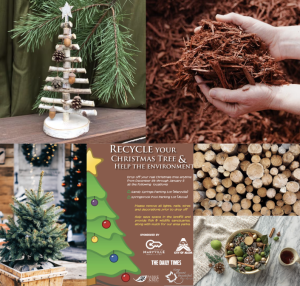
Authentic Christmas trees also prove to be beneficial to nature even after their time in someone’s home, as these trees can be recycled, according to nature.org. The trees can go on to become lumber, mulch, and fertilizer. They can also be composted or given to local recycling organizations and can even become supplies for holiday crafts, according to onetreeplanted.org. Ms. Vondermeden shared some sustainable options for those who do not wish to buy an authentic Christmas tree and advice on how to properly care for a real one.
“Some alternative approaches to buying an authentic Christmas tree include handcrafted trees made from fast-growing birch that can be reused each year,” Ms. Vondermeden said. “Another option is purchasing a small potted tree from a nursery, keeping it indoors during the holidays, and planting it outdoors afterward. For caring for a live tree, I suggest placing it in a cooler room, keeping it well-watered with a fresh cut, and monitoring moisture to reduce needle drop. After the holiday season, trees can be left outdoors to decompose naturally, used as wildlife habitat by adding bird feed, or taken to a designated composting site.”
Featured Image by Ruby Boeding ’28