


The Network HEART Projects offer Upper and Middle school students across the Network of Sacred Heart Schools the opportunity to participate in reimagined, immersive service-learning experiences. Previously known as the Network Summer Service Projects, the Network HEART Projects reflect months of collaboration and a renewed commitment to developing students who act with purpose and personal agency to challenge social structures that perpetuate injustice.
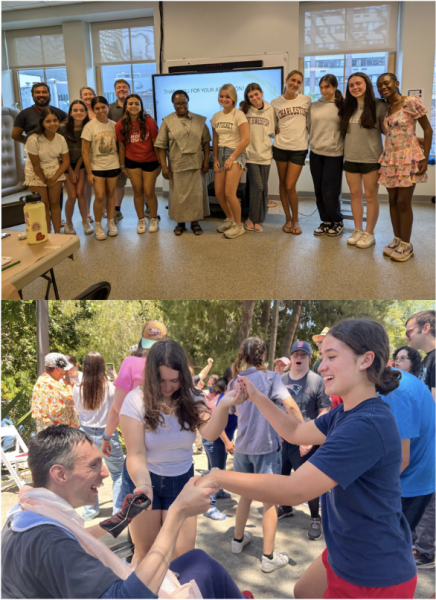
The HEART Projects initiative aligns with the criteria of Goal III, a social awareness which impels to action, and Catholic Social Teaching, inviting students and faculty into transformative learning opportunities that address a wide array of social justice issues. These include indigenous solidarity, food insecurity, environmental justice, disability rights, immigration issues, and more. In addition, participants engage in purposeful learning, meaningful action, reflection, and post-project integration. Mr. Michael Maida, Director of Service Learning and Upper School Service Coordinator, shared how the HEART Projects help students deepen their understanding of social justice issues and broaden their perspectives.
“There are so many different projects that could pique a student’s interests, everything from sustainability to working with disabled adults,” Mr. Maida said. “Students are immersed into communities in need, delving deep into educating themselves about the main topic, reflecting about their day when they are finished, and working to make a plan to bring the chosen project into their school community.”
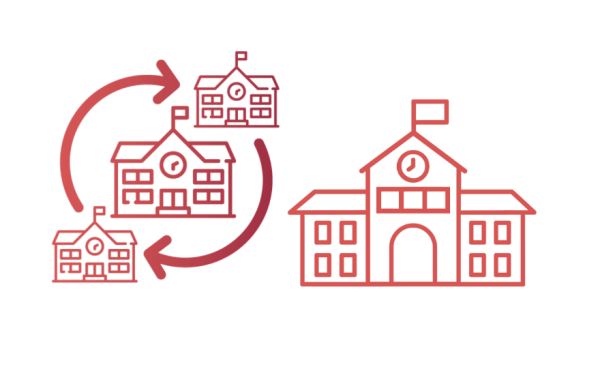
To expand the reach of the HEART Projects, there are two project models. These models preserve the institutional significance of the projects within Sacred Heart Greenwich’s community while fostering connection, collaboration, and continuity among Sacred Heart Network students and faculty nationwide. The first project model, Legacy Projects, includes traditional and school-hosted experiences. A Network school hosts Legacy Projects on its campus, within its region, or in partnership with a Sacred Heart-affiliated organization. The second model, Collective Change Projects, promotes school collaboration by inviting multiple schools to join a lead coordinating school to create a shared immersive experience. Participating schools select an internal coordinator who works with the lead school and brings a group of students and adult chaperones to collaborate on the project, according to shusc.org. Mr. Maida commented on how these new models promote engaged action, human dignity, and community among participants.
“The Network HEART Projects (used to be called the Network Summer Service Projects) have pretty much been running under the same model since their inception, 30 years ago,” Mr. Maida said. “With our changing times now that we are in 2026, and the needs of our neediest communities, the Network thought it was time to take a pause, reflect on the format of the projects, and revamp them into a more conducive format that fits today’s world.”
Sacred Heart education across the nation reflects a shared mission rooted in the Goals and Criteria. The HEART Projects embody this mission in action. These projects give students and faculty the opportunity to carry out the Sacred Heart mission beyond the classroom through service, community, togetherness, and reflection. Mr. Maida explained how they spread Sacred Heart’s commitment to love, compassion, and service to others.
“I run a middle school HEART Project on the theme of hunger,” Mr. Maida said. “I had a student from our sister school in Newton, Massachusetts who was so moved by our Breakfast Run that it motivated her to begin a similar program at Newton. That is what the impact of a HEART Project should have, and how others can bring this idea into their own community.”
Featured Image by Lilia Newman ’27
