


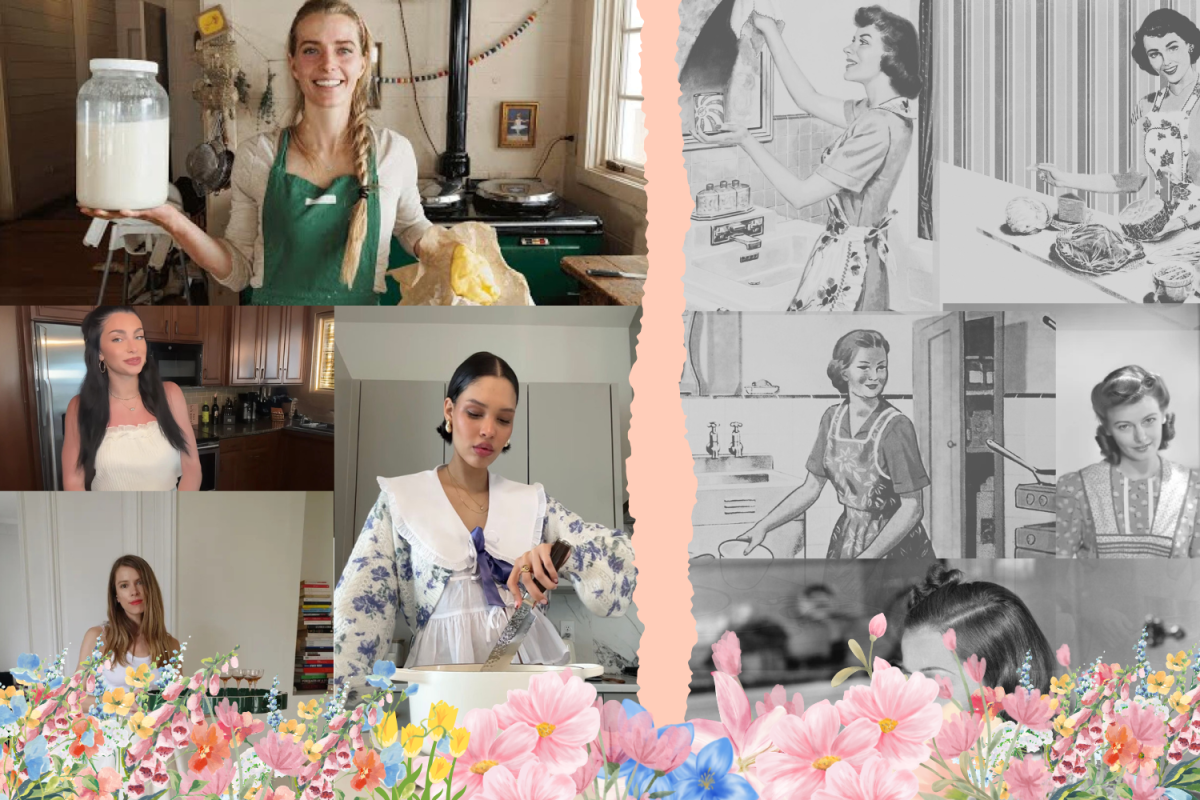
A growing number of social media creators over the past few years are turning everyday domestic routines into carefully produced online content, contributing to the rise of the “tradwife” aesthetic, according to media-diversity.org. This trend highlights homemaking activities such as cooking, cleaning, and family care while drawing on nostalgic imagery associated with mid-twentieth-century domestic life, according to newyorker.com. As the aesthetic grows in popularity across platforms, it sparks conversation surrounding gender expectations, economic realities, and the influence of digital culture on lifestyle ideals.
The tradwife aesthetic often draws inspiration from mid-twentieth-century ideals of domesticity, with vintage dresses, structured routines, and imagery of tidy households, according to parents.com. This presentation creates a sense of simplicity and stability that resonates with audiences seeking slower or more intentional lifestyles. However, historians and cultural commentators note that the social expectations and economic realities at the time shaped this period into one that limited women’s participation in higher education and the workforce, according to media-diversity.org.
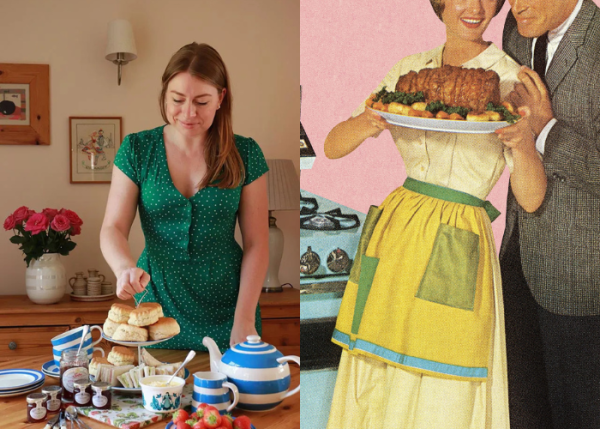
For many creators, participation in the tradwife trend presents itself as a personal lifestyle choice rather than a social model. Many creators emphasize fulfillment through caregiving, homemaking, and routine, presenting household labor as creative or empowering, according to femalexperts.com. At the same time, critics say that the aesthetic’s polished presentation may hide how much work goes into unpaid household tasks and the social expectations that influence family dynamics. Ms. Natalie Michie, the Fashion and Features editor at Fashion Magazine, commented on the allure of the popular tradwife aesthetic.
“I am captivated by the woman on my screen,” Ms. Michie said, according to fashionmagazine.com. “She comes to me in her kitchen, bearing a faint smile, speaking in a soothing tone, and ready to whip up something tasty from scratch. She wears a conservatively tailored dress, showing off her lithe figure through a modest silhouette. She is conventionally beautiful, entertaining to watch, and—whether I admit it to myself or not— aspirational.”
The current economic conditions in the United States (US) also play a role in the trend’s rise. Young adults navigating rising housing costs, student debt, and childcare expenses have increasingly discussed alternative approaches to work and family structure, according to socialsciencespace.com. The idea of a single-income household, once considered less attainable in many urban and suburban areas, has reentered public conversation as individuals reconsider career paths, remote work arrangements, and priorities related to work-life balance, according to kcl.ac.uk. In this environment, the tradwife aesthetic can function as both a form of escapism and a reflection of genuine financial and logistical considerations surrounding family life, according to theunmistakables.com.
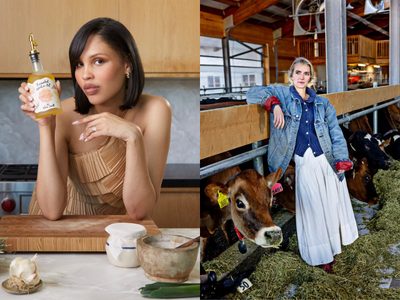
However, the economic aspect of the trend comes from social media itself. Many tradwife creators monetize their content through sponsorships and brand partnerships, which transform their domestic routines into a form of digital labor, according to ifstudies.org. While the lifestyle centers around homemaking, influencers often rely on money from social media to sustain it.
Many viewers also discuss the tradwife aesthetic within broader political and cultural conversations. On social media, the trend intersects with discussions about family values, feminism, and the role of tradition in modern society, according to hawaii.edu. Some argue that the aesthetic reflects a reaction to rapid social change, including shifting expectations surrounding careers and relationships, according to gnet-research.org. Others caution against viewing the trend as politically uniform, arguing that many viewers engage with tradwife content because they appreciate its aesthetics or personally agree with its lifestyle values, according to, according to abc.net.au.
Social media algorithms have further amplified the visibility of the trend by rewarding visually cohesive and emotionally engaging content. The highly stylized nature of tradwife videos contributes to their appeal. This digital amplification can shape perceptions of normalcy or aspiration, according to CNN. Dr. William Brady, a social psychologist at Northwestern University, explained the effects of social media algorithms.
“One of the key outcomes of functional misalignment in algorithm-mediated social learning is that people start to form incorrect perceptions of their social world,” Dr. Brady said, according to technical.ly. “When algorithms amplify moral and emotional information, misinformation gets included in the amplification.”
Featured Image by Catherine Ononye ’27
