



Humans have found companionship and emotional solace in dogs, the first domesticated animal, for at least the past 14,000 years. Over this period, dogs have become an important part of many human families, according to smithsonianmag.com. In particular, therapy dogs, trained to provide comfort and affection to places where they are most needed, such as hospitals, schools, nursing homes, and disaster areas, provide numerous mental health benefits to people of all ages, according to therapydogs.com.
Throughout domestication and natural selection, dogs have developed a remarkable ability to respond to human emotional states and social cues. Because of this sensitivity, they form strong, genuine, complex bonds with humans, similar to those of infant-caregiver relationships. In the United States (US), about 63 million households own at least one dog, and a majority of these households consider their dogs as part of the family, according to nih.gov.
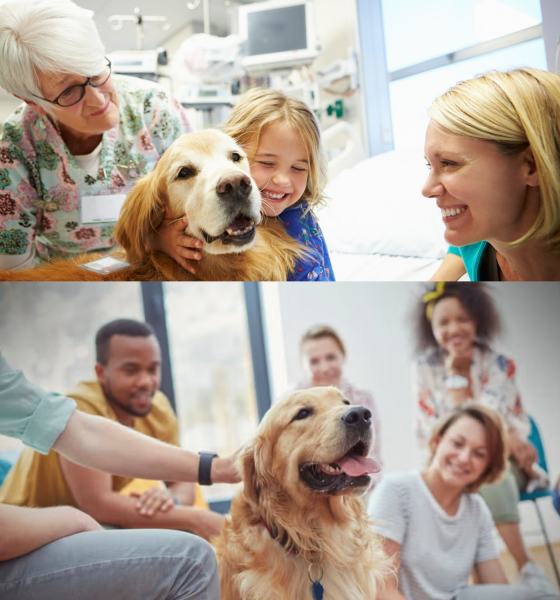
People first began to formally train dogs as assistance animals during World War I (WWI) to help soldiers and veterans with visual impairments in Germany and the US. They gained more popularity in World War II (WWII), and in the decades that followed, assistance dogs began supporting individuals with a wide range of disabilities and medical conditions, including epilepsy, diabetes, and post-traumatic stress disorder (PTSD). In the 1970s, psychologists Dr. Samuel Corson and Dr. Elizabeth O’Leary Corson discovered that many of their patients with psychiatric disorders responded positively to dogs. The patients showed affection toward the animals and communicated more easily with each other and with staff when in the company of the dogs, according to nih.gov. Since this discovery, professionals have increasingly used dogs in animal interventions to help people, particularly children, develop social interaction skills and reduce behavioral outbursts or panic attacks, especially among children with autism-spectrum disorders, according to wsj.com.
Dogs often calm people through both physical presence and interactions. Their presence can increase the levels of oxytocin, a hormone associated with trust and empathy, lower levels of cortisol, the brain’s stress hormone, reduce the body’s blood pressure, increase relaxation, and create a sense of social connection, according to healthcare.utah.edu. Therapy dogs also learn to recognize signs that someone is suffering from PTSD. These signs can range from experiencing a flashback to changes in routine or body language. The dogs help by nudging or resting on them, which grounds the person to the present moment, according to healthcare.utah.edu.
While research on the severity of PTSD symptoms that therapy dogs can alleviate is somewhat limited, studies do prove that dogs can be beneficial through easing a person’s sense of isolation by offering companionship and affection, providing a sense of security, and helping them form connections with the people around them. In fact, the duties of caring for a dog, including feeding, walking, petting, and bathing, are often therapeutic in themselves, as these actions remind the caregivers that they are responsible for another life besides their own, according to uclahealth.org. Dr. Carole Lieberman, a psychiatrist, shared some of the mental health benefits that therapy dogs can provide, according to CNN.
“In a way, we could all use a psychiatric service or therapy dog because of the incredible amount of stress that we’re all under,” Dr. Lieberman said, according to CNN. “Through owning a pet, you can prove to yourself that you can take care of another living creature. It reassures you that you can take care of yourself.”

At Sacred Heart Greenwich, Dr. Lisa Schwartz, Upper School Psychologist, collaborates with the Behind Every Smile (BES) Club to organize therapy dog visits several times a year, offering students of all ages a chance to ground themselves, laugh, build social connections, and prioritize their well-being. Dr. Schwartz shared why she thinks it is important for schools to support student mental health in creative ways, such as hosting therapy dogs, and a favorite moment that stood out to her during one of the visits.
“Therapy dogs can have a really positive impact on students, especially during stressful times or times that feel overwhelming or complicated or even monotonous,” Dr. Schwartz said. “Interacting with a dog can lower stress hormones and increase calming chemicals such as oxytocin. Even a few minutes of petting a dog can help students feel more grounded, make them laugh, or get affection. They can also improve students’ moods with their silly mannerisms and calm demeanors. I particularly always love to watch the little lower school students interact with the dogs. They come over with such joy, and some actually come over with a little bit of fear, but within a few seconds, they get a lick or a little nod or a little rub from a dog, and it seems to really brighten their day. I find it absolutely incredible to watch.”
Featured Image by Blaire Williamson ’27
