



Rejection is uncomfortable, but it is unavoidable. Everyone faces it. However, the fear of rejection often holds people back more than rejection itself does. Many talented individuals avoid putting themselves out there to avoid feeling personally deficient. The more times people ask, the more noes they receive, and the more yeses become possible, according to forbes.com. From college decisions to relationships and countless opportunities, teenagers encounter rejection frequently. Although rejection can feel personal and painful in the moment, it is necessary for long-term growth and expanded opportunity.
Rejection is not personal. It is a part of life and does not determine one’s worth. Decision-makers may lack information, hold different priorities, carry biases, or face constraints others cannot see or influence. People should not let a subjective assessment define their self-worth. Individuals must resist interpreting rejection as a reflection of permanent inadequacy, according to forbes.com. Ms. Lynn Lyons, a psychotherapist and author of books such as The Anxiety Audit: Seven Sneaky Ways Anxiety Takes Hold and How to Escape Them, explains that anxiety can increase when people are unable to tolerate the discomfort that comes with risk, according to The New York Times. Ms. Lyons discussed how avoiding rejection limits opportunities for connection.
“Being afraid of rejection, or avoiding rejection, means that you are limiting the possibility of connection,” Ms. Lyons said, according to The New York Times. “You can’t have one without the other.”
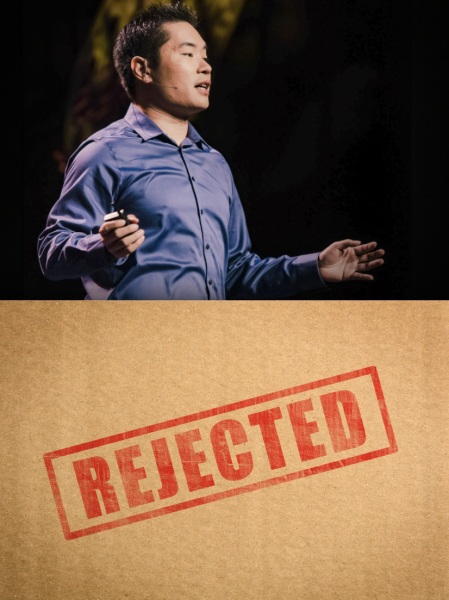
Mr. Jia Jiang, author of Rejection Proof: How I Beat Fear and Became Invincible Through 100 Days of Rejection, turned a painful investor rejection into a 100-day rejection experiment, according to vogue.com. In his TED Talk, “What I Learned From 100 Days Of Rejection,” Mr. Jiang describes how repeated exposure reduced his anxiety, desensitized him to hearing “no,” and increased his openness and positivity. People even started saying “yes” to absurd requests, according to theguardian.com. Like Mr. Jiang experienced, rejection weakens fear while building resilience.
The game of rejection is arithmetic. The more someone plays the game, the better the odds of success. Risking rejection expands possibility. Instead of turning to negative comparisons, blame, self-rebuke, and self-pity, people can use rejection to their advantage as feedback for growth, according to forbes.com. Those who continue to show up and put themselves out there, even when things do not go according to plan, enjoy long-term success.
The idea of “rejection therapy” has become increasingly popular on social media, but this does not mean every aspect of life should be a game. Intentionally putting oneself out there increases opportunity, even without optimizing every decision for maximum gain. After all, the worst that could happen is “no,” according to vogue.com.
One content creator who embraces rejection is Ms. Gabriella Carr. Ms. Carr created a series called “The 1,000 Rejections of Gabriella Carr,” where she tracks every “no” from applications, auditions, and submissions. She chose 1,000 because the number feels both ambitious and attainable. Unlike other social media trends such as the 75 Hard, this challenge welcomes defeat instead of expecting perfection, according to The New York Times. Ms. Carr has engaged in 220 tasks so far, received 86 rejections, and still awaits responses to 117 requests. However, she has also earned 17 “yeses” to date, according to cnbc.com. By normalizing rejection, facing it becomes less personal and emotional. Ms. Carr shared how pursuing rejection pushes her out of her comfort zone.

“[The challenge] has made me realize how much you can get just by asking,” Ms. Carr said, according to cnbc.com. “There are so many opportunities out there, and people are so willing to help and lift one another up and give opportunities out when they can.”
Ms. Carr has earned 17 yeses, including winning a pageant title, booking acting roles, and even securing approval for a Dutch passport. Since September 2025, her Instagram following has expanded from 17,000 to 112,000, which some may consider a “yes” in itself, according to The New York Times. By challenging herself to reach 1,000 noes, Ms. Carr has reframed her view of rejection. She reflected on the idea that every “no” is an opportunity for something better.
“A no for me is a yes for someone else,” Ms. Carr said, according to cnbc.com. “I might lose out on a partnership, someone else might have just gotten their dream partnership. There’s going to be something better waiting for me.”
Ultimately, rejection is not the opposite of success. It drives the process. Avoiding rejection limits opportunity, while embracing it expands potential. When people expose themselves to rejection, they reduce fear and increase possibility. The more times someone asks, the better the odds become. Therefore, the real risk is not rejection but failing to step forward at all. To achieve long-term success, one must put themselves out there, even when it feels challenging or impossible, because every attempt carries the possibility of attaining a “yes.”
Featured Image by Brianna Timlin ’26
