


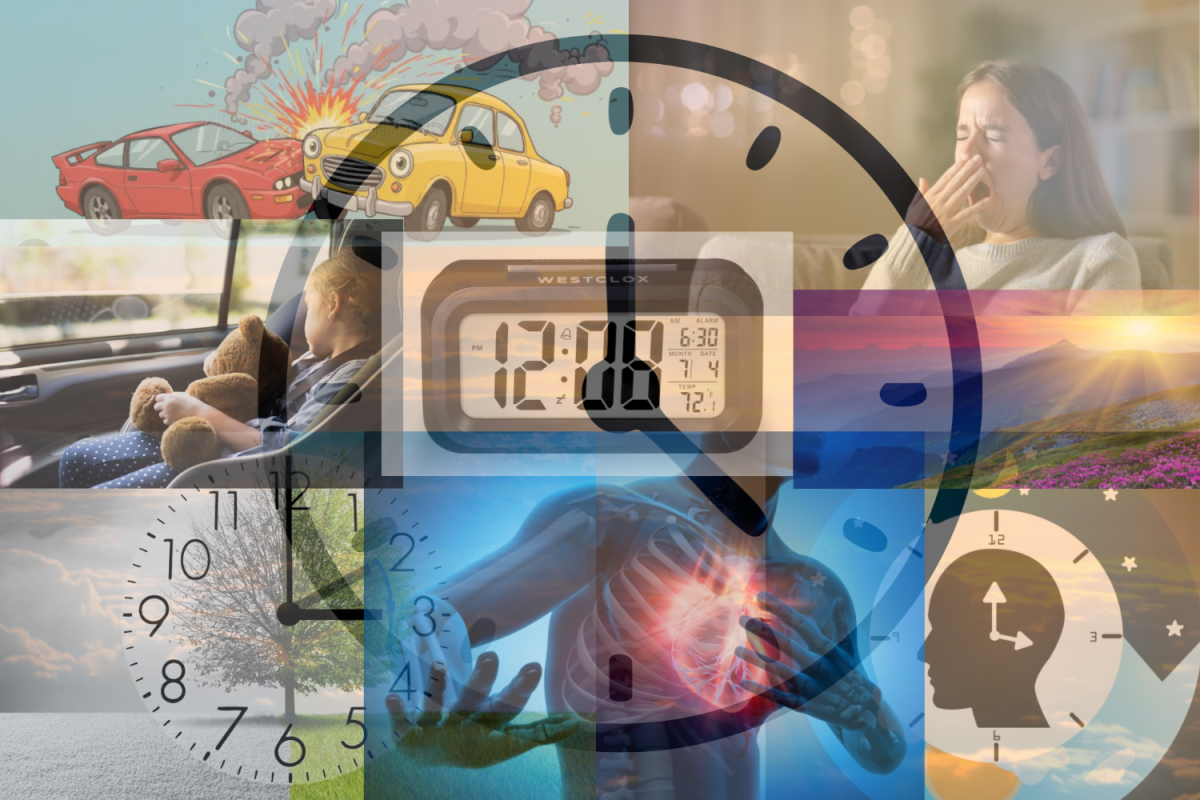
As the clock hands skip an hour in the early morning, Americans experience detrimental short-term consequences. Daylight savings is the practice of setting all clocks back one hour in the winter and then reversing this action in the spring. As a result, during the winter months, there is an increased amount of daylight in the morning, whereas in the springtime, there is additional daylight in the evenings. Although the biannual clock change allows for more productivity during the day, the one-hour change has a detrimental effect on interrupting circadian rhythms, resulting in increased rates of car crashes, heart attacks, and an overall decline in mental health.
Daylight savings originated in 1918 during World War I as a way to conserve gas or oil used to fuel lamps by adding another hour of daylight. Then, it passed through Congress in the Uniform Time Act of 1966 as an effort to observe a uniform system of time in the United States (US). Daylight savings allows for more daylight in the evenings during spring, which allows for more exercise, family time, and activities after work, according to reflector.uindy.edu.
Additionally, lower crime rates occur in daylight, so, in the spring, crime rates decline. More daylight in the evenings allows for more commerce and spending after work. This has a great benefit on industries like golf and tennis and has a beneficial impact on the national economy, according to reflector.uindy.edu.
Although daylight savings has positive economic benefits in the latter half of the year, it balances out the detriments in the first half of the year. Even though daylight savings encourages an increased amount of exercise in spring and summer, that is not to say individuals cannot workout in winter and fall. There are many at-home workout or gym memberships available nationwide.
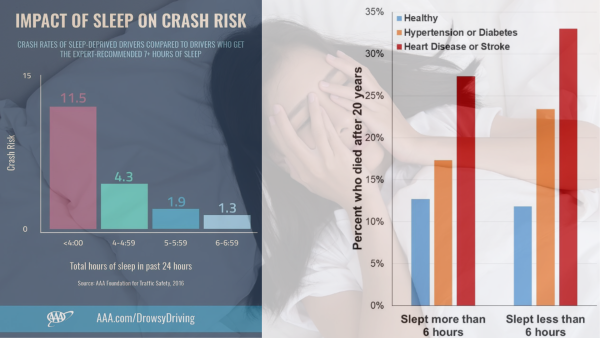
Circadian rhythms are like the body’s internal clock, regulating sleep cycles, hormone release, appetite, and temperature. The one hour change for daylight savings results in this system malfunctioning, which causes immediate sleep deprivation and reduced alertness, according to ap.org. Although the one hour change does not seem like a very taxing adjustment, the human body takes anywhere from days to months to recover from it, according to nm.org. After the time change, the number of fatal car accidents increased six percent in 2020 due to the lack of sleep, reduced alertness, and darker mornings, according to unchealthsoutheastern.org.
Additionally, researchers concluded that in the week following the spring transition, the risks of a heart attack increase 24 percent as a result of sleep disruptions which interfere with the body’s circadian rhythms. This risk can become detrimental to individuals with preexisting cardiovascular issues, according to unchealthsoutheastern.org. Moreover, studies reflect that in the fall, heart attacks risks drop 21 percent, according to michiganmedicine.org.
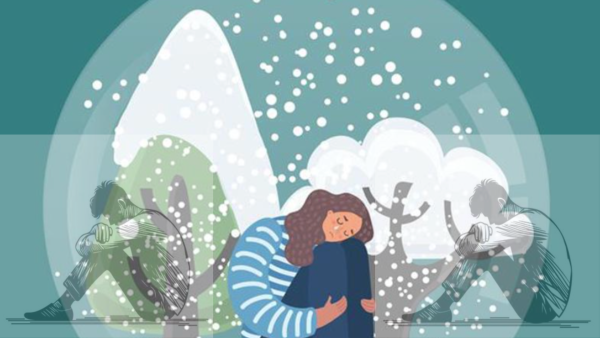
Daylight savings causes disruption of sleep, which can also lead to mood swings and decline in mental health. Inadequate sleep results in reduced emotional control, anxiety, and sadness, according to creeksidebh.com. The spring transition results in lower awareness due to fatigue, linked to higher risks of anxiety and depression. On the other hand, the fall transition can trigger Seasonal Affective Disorder (SAD), decreased motivation, and mood imbalances, according to map-clinic.com. SAD is a depression that is triggered by changing seasons, due to the lack of sunlight, according to mayoclinic.org. Ms. Susan Averett, professor of economics at Lafayette College, commented on the importance of recognizing the negative side of daylight savings.
“As policymakers consider whether to eliminate the twice-yearly clock changes, they must recognize that our internal clocks are set by the sun,” Ms. Averett said, according to psychiatrist.com. “Ignoring this natural connection has serious consequences for our society’s well-being. It is time for our policies – and our clocks – to catch up with our biology.”
Ultimately, the practice of daylight savings has detrimental consequences. It causes a major disruption to the body’s circadian rhythms, resulting in sleep deprivation. The sudden lack of sleep heightens the risk of heart attacks, increases the risk of car accidents, and has a negative impact on mental health. The downsides to daylight savings outweigh the temporary positive impacts.
Featured Image by Claire McMonagle ’27
