


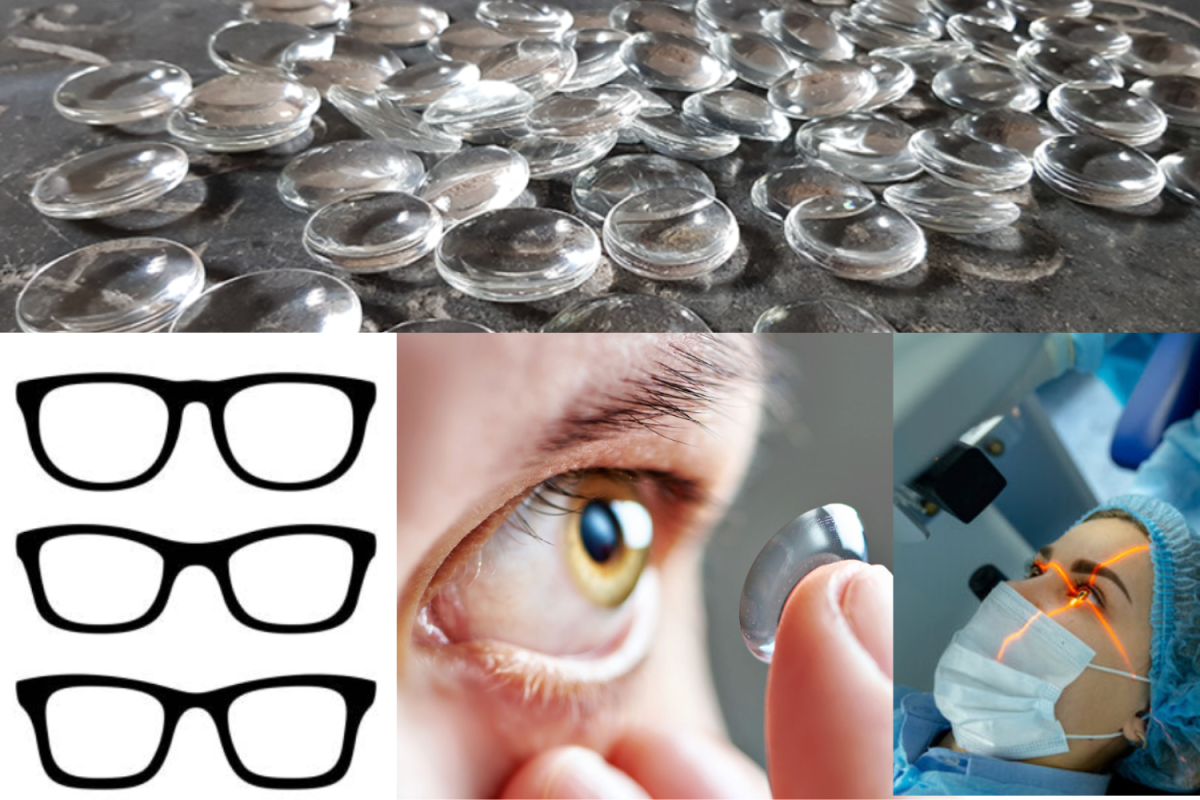
Over time, new medical research has improved knowledge of eyesight correction methods and made them more effective. The revolutionary invention of glasses in the 1200s sparked the evolution of other eye correction methods such as contact lenses and Laser-Assisted In Situ Keratomileusis (LASIK) surgery, according to discovervision.com. From reading stones to LASIK surgery, cost limits the accessibility to eye corrective methods, according to americanrefractivesurgerycouncil.org.
Before the invention of glasses, the wealthy discovered magnifying methods to enhance their quality of sight. A Roman philosopher, Seneca, used glass globes filled with water to magnify words in texts, allowing him to read. Similarly, the Roman emperor Nero used a magnifying emerald to watch gladiator fights, according to monocleeyecare.com. A common practice among wealthy Romans was to use reading stones. Reading stones were domes of transparent quartz placed on texts to enhance reading, which were especially useful for the elderly. However, magnifying devices were not available to the common people, making them a symbol of wealth, according to isthmuseye.com.
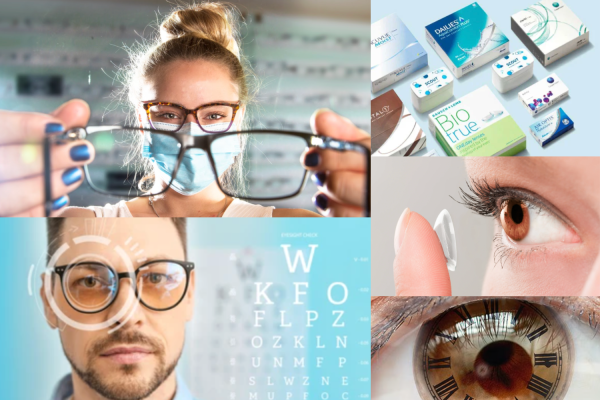
Eventually, common people gained eye corrective care with the invention of glasses. Although first created by an unknown person, the invention of glasses in the 1200s primarily helped monks, scholars, and artisans suffering from farsightedness and presbyopia, which is the inability for the eye to focus on nearby objects, according to zeiss.com. Crystal manufacturers had a major breakthrough in Italy when they created the first pair of functional glasses called rivet glasses in the late thirtieth century, according to zeiss.com. Since the 1200s, glasses have been a fundamental method of eye correction devices. Eyeglasses have undergone changes throughout time to appeal to a larger population, resulting in around four million people in the world wearing glasses, according to overnightglasses.com.
Another revolutionary eye corrective device is contact lenses. Leonardo da Vinci created the first concept of a contact lens in 1508. He sketched how opening an eye in water could correct vision, according to warbyparker.com. A German maker of glass eyeballs created the first glass contact lens to cover the entire eye. Eventually, other forms of contact lenses evolved to include the first plastic lens, the first corneal lens, and the first soft contact lens. More recently, bifocal contact lenses, daily disposable contact lenses, and silicone hydrogel contact lenses have made the usage of contact lenses more accessible and efficient in daily life, resulting in increased use, according to warbyparker.com. Around 125 million people worldwide wear contact lenses, according to professionalvisioncareinc.com.
In 1974, Soviet Union eye surgeon Dr. Svyatoslav Fydorov treated a patient with slivers of glass in his eye. Dr. Fydorov removed the glass with a scalpel and then discovered that the cuts in his eye had reshaped the cornea and corrected his vision. American doctors Dr. Leo Bores and Dr. Edward D. Glinski read about Dr. Fydorov’s discovery in medical publications and traveled to Moscow in the mid 1970s to observe the findings, according to pmc.ncbi.nlm.nih.gov. These American doctors had adequate funding to research this discovery that lead to the beginning of all-laser LASIK vision correction, according to lasereyecenter.com.
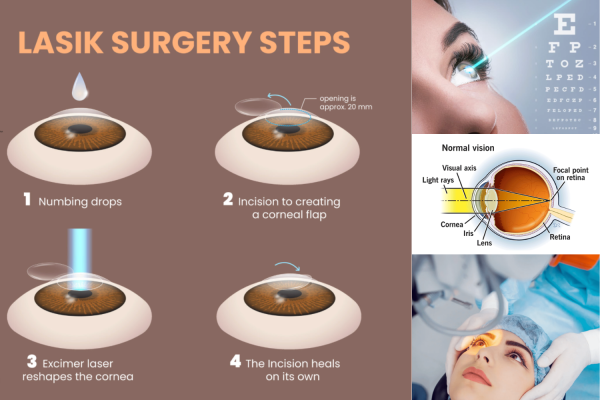
LASIK surgery is another efficient way to correct vision problems. The laser in the surgery emits ultraviolet light that reshapes the cornea, the eye’s transparent outer layer, allowing the patient to see clearly without the use of glasses or contact lenses, according to lasikvisioninstitute.com. The Food and Drug Administration (FDA) approved LASIK surgery for the treatment of myopia, nearsightedness, and hyperopia, farsightedness, in 1998. Over 20 million people have participated in LASIK surgery in the United States (US), according to mariettaeye.com. Dr. Christopher Hood, a clinical associate professor of ophthalmology and visual sciences at the University of Michigan shared why patients choose LASIK surgery.
“Most people […] realize they’re sick of contact because of dry [eyes] or want to ride their bicycle without glasses,” Dr. Hood said, according to michiganmedicine.org. “[The patient has] a very good chance of functioning without glasses [and will be] seeing really, really well by the next day.”
Featured Image by Claire McMonagle ’27
