


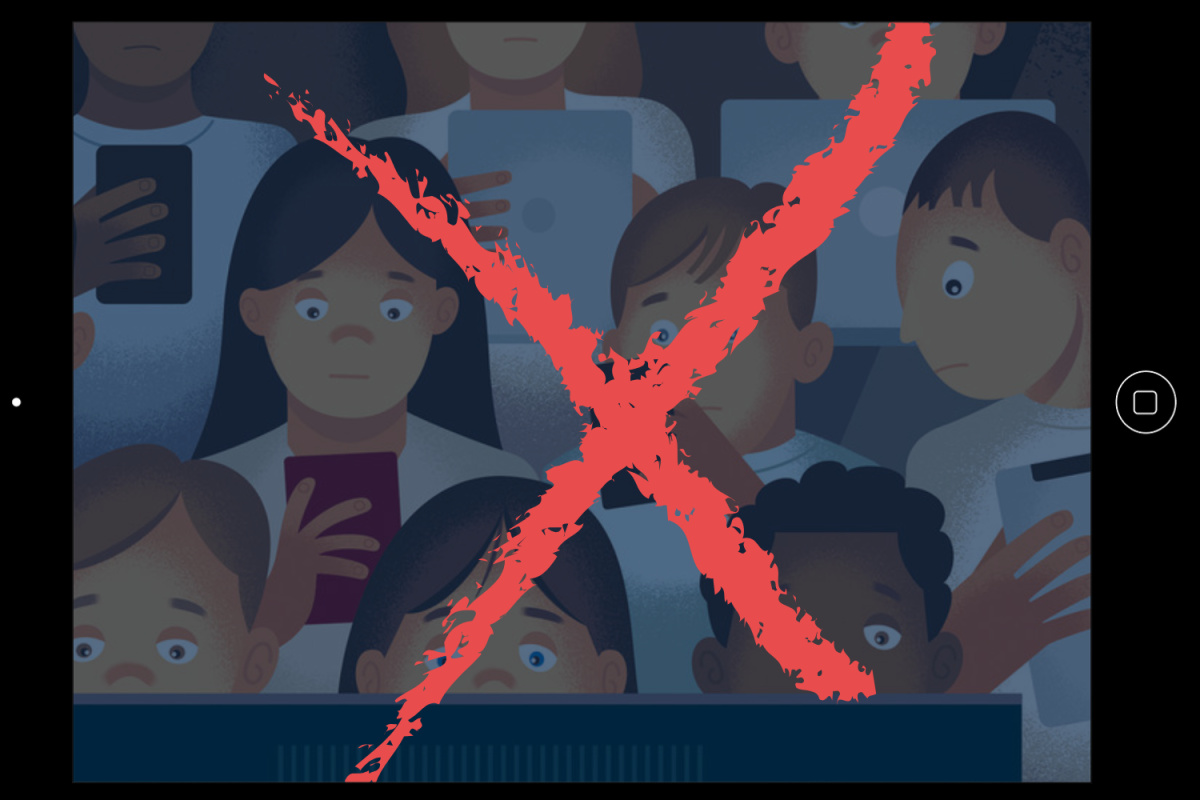
With devices like cellphones and tablets at one’s fingertips, even children spend many hours a day online. Between the ages of zero and 17, children spend between one hour and eight hours 39 minutes on screens per day, according to aap.org. As a result, children have begun to replace time spent on beneficial activities, such as playing outdoors, reading, doing homework or chores, and sleeping, with excessive time spent on screens, according to acpeds.org. It is vital for parents to be proactive regarding the screen time use of their children, no matter the age, so children and adolescents can interact with the benefits of technology in a safe manner.
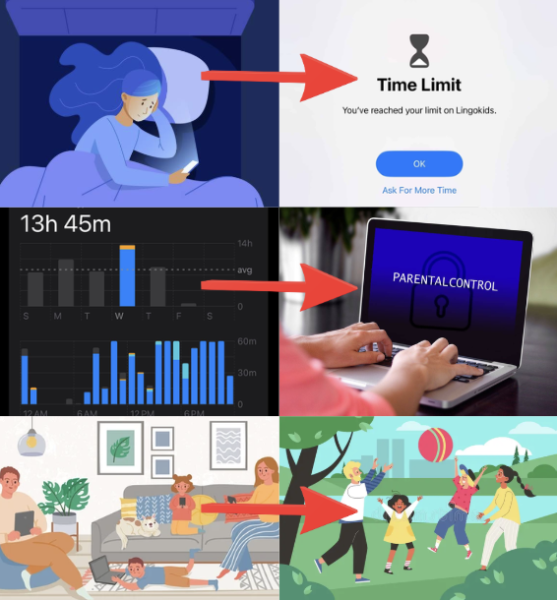
Key ways parents can take responsibility for their child’s screen time is by setting time limits, using parental control software, and promoting activities that do not include screens, according to news.valleychildrens.org. Parents should also avoid using technology during key times of the day, such as mealtimes, especially as children are growing and developing self-regulation skills. For example, using screens during mealtime can lead to mindless overeating habits that are extremely unhealthy, according to parents.com.
Generally, it is important to put in place these restrictions with the child’s age in mind. While infants and young children should rarely interact with screens, it can be beneficial for older children and teenagers to have a healthy relationship with screen time and social media. Dr. Carol Vidal, child and adolescent psychiatrist at Johns Hopkins Children’s Center, emphasized the importance of forming a positive and balanced environment regarding screen usage, according to hopkinsmedicine.org.
“Learning to have a healthy relationship with social media is as important as learning to have healthy relationships with food, exercise and coffee consumption,” Dr. Vidal said, according to hopkinsmedicine.org. “Delaying the purchase of smartphones until the child is ready is a good first step. But, it is also important to instill healthy habits in children’s use of screens given that technology, and social media in particular, will be present throughout their lives. It’s important for us as parents to model healthy social media use and discuss social media citizenship behaviors with our children.”

During the first three years of a child’s life, their brain rapidly develops. Therefore, it important for them to consume media that is nourishing for their growing brains. The impact of screen usage on a child is dependent on time spent watching media, what content they are watching, and the social setting in which they are watching. While some studies have shown that children can benefit from watching television (TV) by learning to mimic the behaviors they see on the screen, research has found that demonstrations from parents have been more successful. Children experience the greatest benefits when they learn through human interaction, according to acpeds.org. Dr. Michelle Yang, a resident at Children’s Hospital of Orange County, commented on the importance of parental involvement in a child’s learning, according to health.choc.org.
“The studies overall have shown that there is definite improvement of learning when there’s a physical presence of adults in the room,” Dr. Yang said, according to health.choc.org. “Having a background TV [has] a very negative effect on infants and their language development. When there was background TV, parents tended to talk less. [They] tended to be more passive in their interactions with their children when the TV was on. These videos are categorized more as an imaginary concept [for children] rather than a real-world concept, and ultimately doesn’t become translated into their development.”
Excessive screen time also negatively affects older children and adolescents. For example, in children ages eight to 11, those who spent more time on screens have less brain connectivity in areas such as visual word formation, language formation, and executive functions as opposed to children who spent greater time reading. Additionally, teenagers spend a great portion of their day on various social media platforms. Social media can be a way for teenagers to connect with friends and discover a creative outlet, yet it can also sever personal connections, create distractions, and induce bullying, jealousy, and peer pressure, according to acpeds.org. Dr. Vidal noted the grave impact excessive social media use has on adolescents, according to hopkinsmedicine.org.

“Research is showing that those who are more depressed tend to use social media more, and vice versa,” Dr. Vidal said, according to hopkinsmedicine.org. “But it is not clear that the cause of depression is social media use. However, excessive social media use is associated with behaviors, such as poor sleep, increased social comparisons, impact on learning, and exposure to cyberbullying and negative content, that could contribute to the worsening of depressive symptoms.”
Exposure to social media has caused many children and adolescents to grow up too soon and too fast. As children and preteens spend hours on social media, they are constantly consuming media produced by adults, setting impossible beauty standards for them, according to thesciencesurvey.com. In particular, skincare products intended for mature skin have gained popularity on social media among this young demographic. Beauty companies seen in Sephora are exploiting this trend and marketing products towards young consumers who may experience adverse effects of usage. This phenomenon further exemplifies the need for parents to be proactive in regards to the media their children are consuming as some companies put their own profit above the health of today’s youth, according to thesciencesurvey.com.
Ultimately, it is extremely important for children of all ages to engage in screen time in a healthful manner, especially as technology and social media grow within society. Screen time can be beneficial for children in moderation, especially if it consists of educational television programs, yet the implementation of social media and heavy screen time usage in the lives of young children and adolescents can be very detrimental. Allowing children excessive screen time without sufficient monitoring can stunt the growth and development of their mind. Parents must begin taking greater measures to enrich their children’s minds, even when they are online. Using devices as a way to soothe a child or help them “fit in” with their peers is never worth the cost of one’s health.
Featured Image by Ruby Boeding ’28