


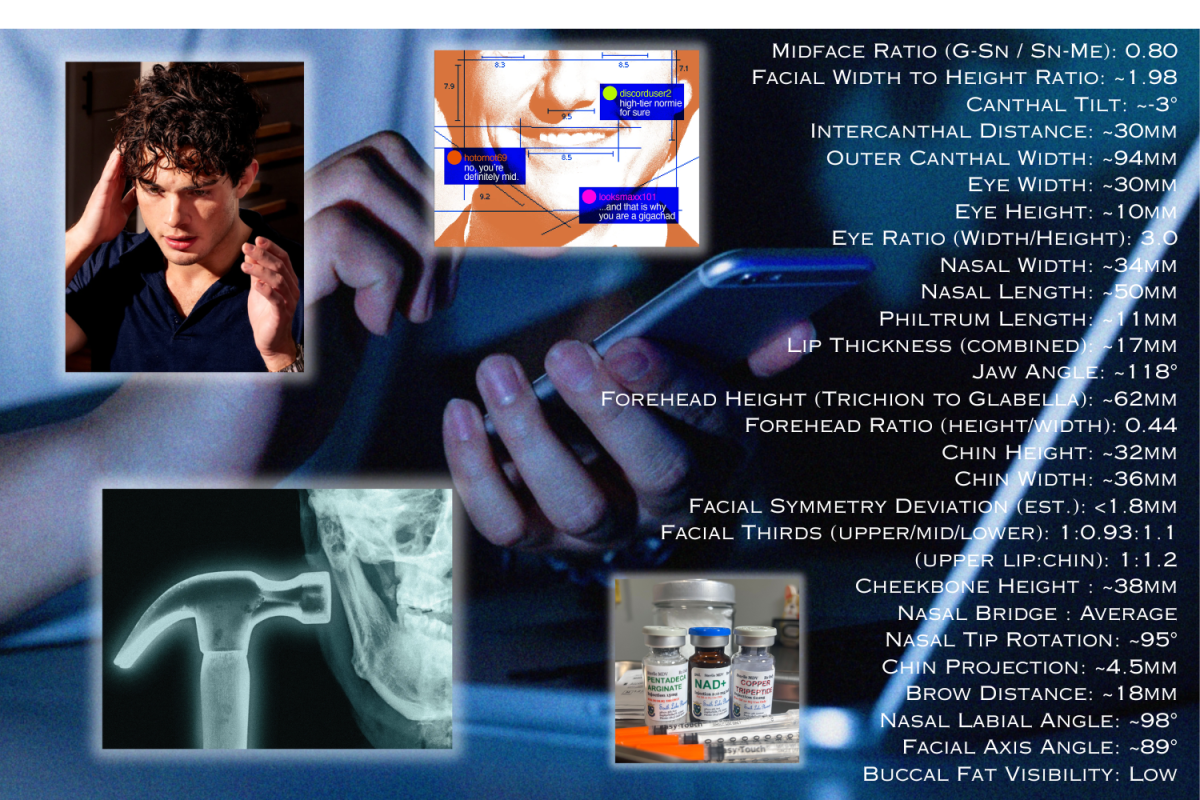
On modern social media platforms, a community of young men strive to achieve attractiveness in today’s society based on increasing particular beauty standards. The term “looksmaxxing” refers to the overall goal and range of practices that aim to maximize a person’s appearance based on a set of criteria within the community, according to bbc.com. With these routines, a distinctive internet culture has emerged, developing its own interpretation of masculinity, beauty standards, and even its own vernacular. While often presented as self-improvement, looksmaxxing goes beyond a typical personal empowerment trend. The movement and its associated influencers encourage their young male audience to pursue beauty no matter the cost, even when their own health is on the line, highlighting the dangers of influencer culture and how it can shape the behavior of vulnerable audiences.
Looksmaxxing has been around since the early 2010s, originally existing within the confines of niche communities on small forums and Reddit pages, according to theguardian.com. Now, in 2026, looksmaxxing is a common topic online, particularly on TikTok, whether through criticism, ironic memes, or genuine interest and practice. Enough people are discussing the aggressive self-improvement trend that the once-obscure vernacular of looksmaxxers has become popular in diverse communities, with terms now in the Merriam-Webster dictionary, such as “mog” and “mewing” which are common vocabulary within the looksmaxxing community that have since spread across social media. As the trend becomes more mainstream, many people have accused the trend of promoting damaging ideals, including toxic masculinity, eating disorders, low self-esteem, and unattainable beauty standards for young men.
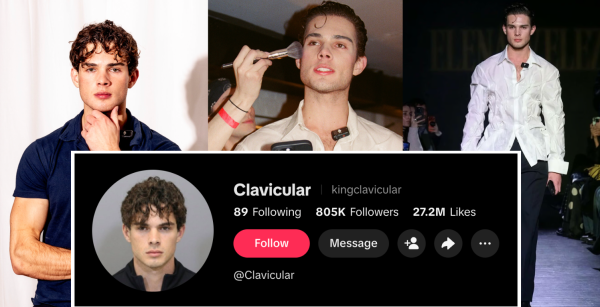
Looksmaxxing influencers have driven much of the trend’s newfound popularity by using their platforms to offer advice on improving one’s physical appearance, often by recommending their own personal routines and habits to others. While there are many different looksmaxxing influencers within the community, the most popular figure of the looksmaxxing movement is twenty-year-old influencer Mr. Braden Peters, known online as “Clavicular.” He has amassed a large following across social media and spends most of his time livestreaming on Kick, an online platform where he makes more than $100,000 a month advertising his looksmaxxing lifestyle to a primarily young male audience, according to The New York Times.
While branded as a form of self-help, looksmaxxing content can become harmful as influencers promote more extreme measures for aesthetic improvement. For example, Clavicular credits his good looks to the variety of drastic measures he has taken, including taking testosterone since he was 14 years old and “bonesmashing,” the practice of hitting the jawbone repeatedly with a blunt object like a hammer to reshape it into a more desirable shape, according to bbc.com. Ms. Christine Ruberti-Bruning, a licensed therapist and certified eating disorder specialist, commented on why looksmaxxing tends to become so dangerous for one’s physical and mental wellbeing.
“There’s nothing wrong with wanting to look good, and caring for your appearance can build confidence and be gender affirming,” Ms. Ruberti-Bruning said, according to healthline.com. “But the big difference is that looksmaxxing is rooted in self-hate and trying to fit in, at the cost of your health and safety.”
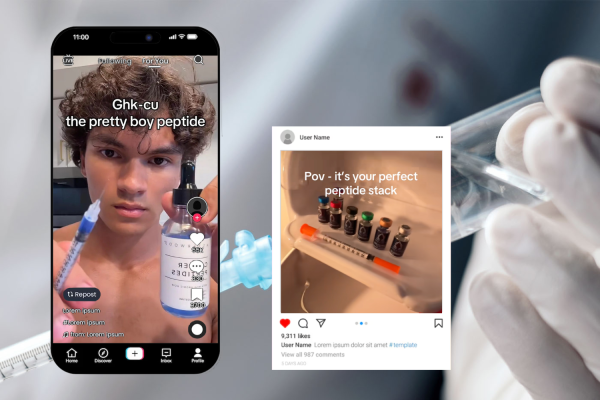
One of the more popular, extreme looksmaxxing methods is the injection of peptides, which are short chains of amino acids that occur naturally in the body and are crucial in many biological processes. People believe that specific peptides can lead to a variety of aesthetic improvements, including boosted muscle growth, reduced inflammation, fat loss, and healthier skin and hair, according to time.com.
While peptides are naturally occurring in the body, experts are concerned because these injections have not been approved by the United States (US) Food and Drug Administration (FDA) and people purchase them from unauthorized distributors. These products carry labels stating that they are for research purposes only and not for human consumption, meaning that distributors do not need to adhere to regulatory oversight and receive no liability for negative effects, according to time.com. Mr. Adam Taylor, a professor of anatomy at Lancaster University, explained the danger behind these unregulated peptides.
“The people using these products are, in essence, becoming lab rats,” Mr. Taylor said, according to bbc.com. “There is some data out there, but in pre-clinical models. Essentially they’ve been tested on animals, but not on humans.”
The growing prominence of these unsafe, extreme practices stems from influencers like Clavicular who credit them for their appearances, exposing the problematic influence of online personalities over their audiences. In a journal from the Proceedings of the New York State Communication Association, experts researched the effect influencers have on consumers and found in a survey that when an influencer share similarities with the consumer, like interests, hobbies, and common identity, viewers are more likely to trust them, and as a result, the things they advertise and recommend, according to docs.rwu.edu.
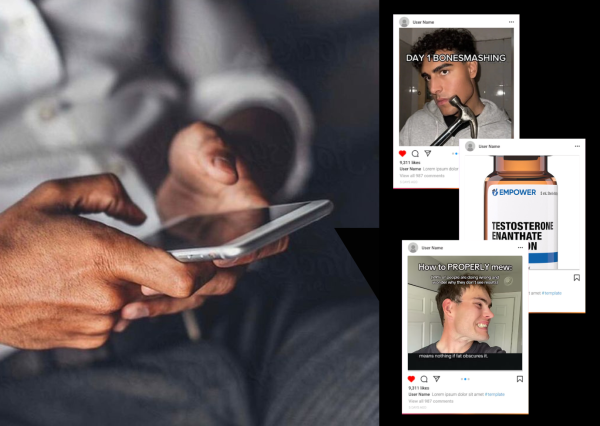
The looksmaxxing community primarily consists of young men, an especially vulnerable audience who can quickly internalize harmful ideals like distorted body-image issues and obsession with appearance, according to bbc.com. Mr. Jason Parham, a journalist who has investigated the dark side of the community, comments on why young men are so susceptible to the dangers of looksmaxxing.
“It’s really harmful, I think, to a lot of young men who are looking for that acceptance or belonging or who are trying to really improve their life so they can do better,” Mr. Parham said, according to npr.org. “And so I think a lot of young men are just getting wrapped up in this idea of extreme beauty sport where this is something that will get me what I need, and I’m just going to listen to this guy ’cause it worked out for him, so maybe it will work out for me.”
While the impact of social media personalities is rarely hazardous, the looksmaxxing movement exemplifies how far the power of influencers can go. From dangerous at-home procedures like bonesmashing to the injection of unregulated drugs purchased online, impressionable young men put their mental and physical health at risk in pursuit of unattainable beauty standards on the advice of the social media stars they admire and trust. Social media audiences must recognize the dangers of the influencer-viewer relationship.
Featured Image by Emilia Oliva ’27

Olivia Franco • Apr 2, 2026 at 6:31 pm
Very interesting and informative! Thank you Miss. Oliva for your thoughtful words!