


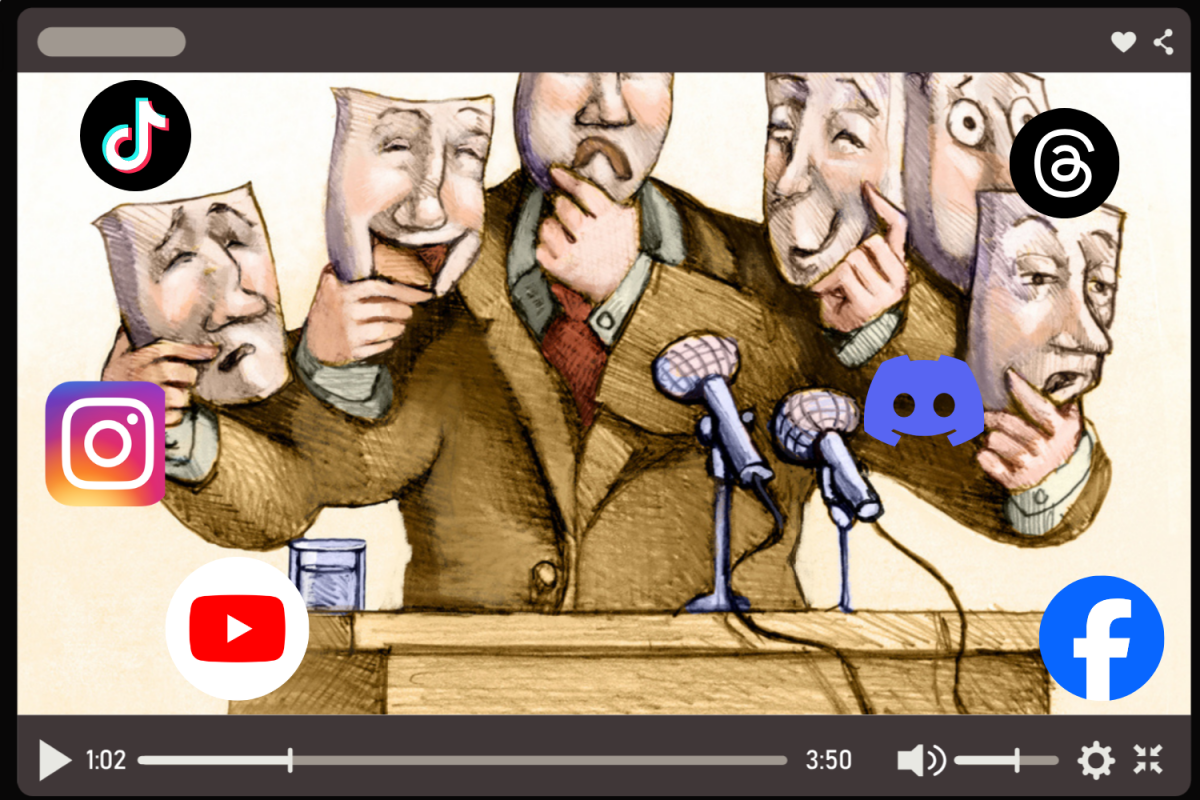
In today’s political landscape, social media has become one of the most powerful tools shaping campaigns, public perception, and voter engagement. Platforms once intended primarily for entertainment and personal connection are now central to how politicians communicate with the public, according to georgetown.edu. Digital platforms have blurred the lines between governance and pop culture, which then allows candidates to craft carefully curated online identities, according to knowledge.wharton.upenn.edu. This shift has not only transformed how campaigns run, but also how voters interpret authenticity, credibility, and relatability in political figures, thus redefining what it means to connect with an audience in the current political scene.
In recent years, there has been a noticeable increase in politicians actively using social media to engage with voters. From Instagram stories to TikTok videos, candidates no longer restrict themselves to traditional means of campaigning or strictly televised debates, according to The New York Times. Instead, they participate in ongoing digital conversation, respond directly to comments, share “behind-the-scenes” moments, and address issues in real time, according to brookings.edu. This accessibility creates the impression of a more open and responsive political process. It also allows voters, and particularly younger audiences, to feel more directly involved in political discourse. As a result, social media has shifted campaigns from one-sided messaging to more personal and interactive engagement where candidates and voters are constantly in conversation.

Social media also allows politicians to present themselves as more relatable and aligned with everyday people, according to online.utpb.edu. By posting casual content, such as daily routines, personal anecdotes, reactions to trending topics, personal stories, or reactions to trending topics, politicians can cultivate a sense of authenticity. This curated informality helps them appear less distant and more in touch with voters’ lives, according to news.gallup.com. In many ways, this strategy taps into populist appeal through emphasizing shared experiences over institutional authority. While this can strengthen voter connection, it also raises questions about how much of this relatability is genuine versus strategically constructed to resonate with specific audiences. Dr. Patrick J. Egan, Associate Professor of Politics and Public Policy at New York University, talked about some of the benefits of using social media in politics, according to 2017-2021.state.gov.
“Social media is a virtually unmediated way for politicians to talk to their followers,” Dr. Egan said, according to 2017-2021.state.gov. “Which means that they leap over the traditional gatekeeping and filtering role that the media, like you, play in terms of helping people to understand political races. So that continues to be a really important way that politicians can talk to their audiences or their followers in essentially an unfiltered sense without any challenge or pushback from [the] news media.”
Another major shift is the decline of traditional media as the primary place for political communication. Candidates no longer have to rely solely on news outlets to deliver their messages to the public, according to poynter.org. Instead, they can use platforms like Twitter, TikTok, and Instagram to communicate with millions of followers instantly. This bypassing of formal channels allows politicians to control their narratives more tightly and respond quickly to developments. However, it also reduces the role of journalistic oversight, which traditionally provided fact-checking and context, according to niskanencenter.org. As a result, information can spread faster, but not always with the same level of verification, creating both opportunities and challenges for voters trying to stay informed.
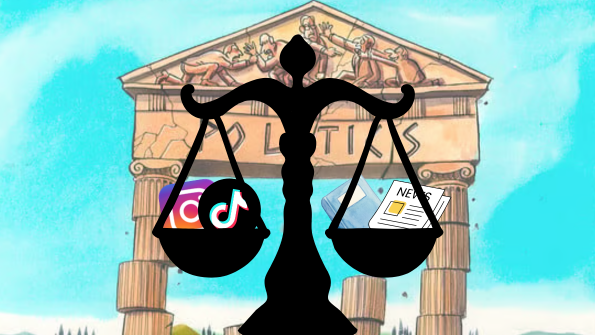
The potential for virality is one of the most significant advantages of social media campaigns. A single post, video, or moment can reach millions within hours, dramatically increasing a candidate’s visibility. For example, during Mr. Zohran Mamdani’s campaign for mayor of New York City last November, the strategic use of social media helped amplify key messages and attract widespread attention. Viral content can energize supporters, draw in new audiences, and create momentum that extends beyond traditional campaign efforts, according to theconversation.com. This rapid amplification can be especially impactful for lesser known candidates seeking to establish a presence in the currently overcrowded political landscape. Ms. Jane Hall, a communications professor at American University who studies politics and the media, shared her opinion on the occasional effectiveness of social media when campaigning, according to bbc.com.
“Mamdani’s robust social media strategy engaged these voters by delivering an image of a political candidate that young people – frustrated with older, more established candidates – craved,” Ms. Hall said, according to bbc.com. “You have to be seen as being authentic and speaking to what people care about in a way that is hip and makes people want to be on the bandwagon”
The public response, though, to social media-driven campaigns is often mixed but undeniably influential. Many voters appreciate the accessibility and transparency that these platforms seem to offer, feeling more connected to candidates who share frequent updates and personal insights, according to news.gallup.com. For younger voters in particular, social media can make politics feel more engaging and relevant. However, others remain skeptical, questioning whether these online personas accurately reflect a candidate’s true values or capabilities, according to nature.com. The polished and strategic nature of social media content can blur the line between authenticity and performance, leaving voters to interpret what is genuine and what is carefully staged for public appeal.
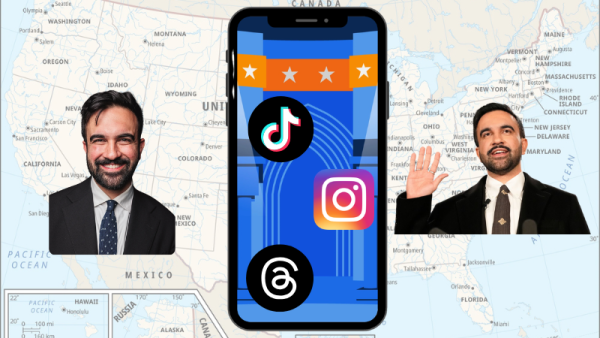
At the same time, the pursuit of virality can sometimes undermine the seriousness of political campaigns. In an effort to capture attention, candidates may prioritize entertaining trend driven content over substantive policy discussion. This can lead to messaging that feels overly simplistic or even performative. While such strategies may succeed in gaining views and shares, they risk diminishing the perceived professionalism and credibility of a campaign, according to sciencedirect.com. As politics become increasingly intertwined with entertainment, there is a growing concern that important issues may become overshadowed by the need to remain relevant in fast moving digital spaces. Mr. Joel Abrams, the Director of Outreach at The Conversation newspaper, shared his opinion on entertainment as a focus in politics.
“While this neglect of political substance in news coverage might not sound as pernicious as hyper-politicization,” Mr. Abrams said, according to theconversation.com. “We believe citizens should be no less worried about it.”
Ultimately, social media has permanently reshaped the way politics functions, offering both unprecedented opportunities and significant challenges. It has made campaigns more accessible and interactive, but it has also introduced new challenges surrounding authenticity, credibility, and the quality of political discourse. Moving forward, the responsibility lies not only with politicians but also with voters to navigate this digital landscape critically. While social media can enhance engagement, it should not replace thoughtful analysis or informed decision-making. Finding a balance between connection and substance will be essential in ensuring that political communication remains both effective and meaningful in an increasingly digital world.
Featured Image by Catherine Ononye ’27
