

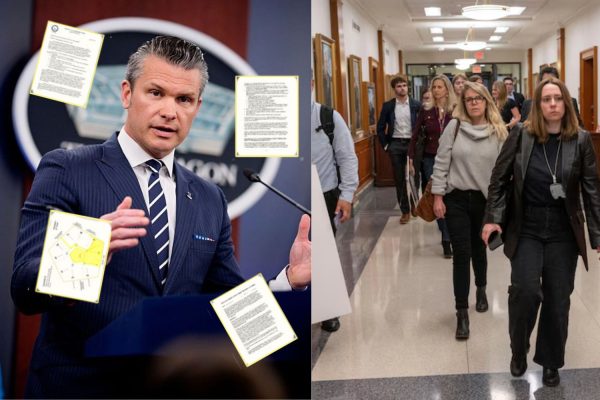
For more than 60 years, reporters have been covering news from inside the Pentagon. When reporters cannot access the Pentagon, they lose valuable stories from military officials. With recent changes to the press rules, groups of journalists have turned in their press badges, packed up their belongings, and left the Pentagon, according to The New York Times. Many news organizations refused to agree to the new rules. NPR, The Washington Post, CNN, and The New York Times did not accept the new rules that Mr. Peter “Pete” Hegseth, Secretary of Defense, established, according to npr.org. Due to these policies, the American people will lose the ability to get information about the armed forces and details that inform the public on national security, according to pbs.org.
The Pentagon announced the new rules that restrict access to certain Pentagon offices and spaces September 2025. The old rules allowed journalists permission to have access to most spaces throughout the building. Journalists are also required to have an escort to many areas of the building. The rules issued by the Pentagon restrict the gathering and publishing of unauthorized information about the Pentagon even if it is unclassified, according to npr.org. News organizations claim that these restrictions undermine the First Amendment protections, according to theguardian.com. The First Amendment states that Congress is not allowed to restrict the press or individuals from speaking freely, according to law.cornell.edu. If the news organization that has agreed to sign breaks any of the rules, there is a likelihood of punishments for the reporters, according to The New York Times. Ms. Nancy Youssef, a journalist for The Atlantic, commented on how these new rules will affect the future of reporting.
“We won’t have that kind of detail that I think has really added nuance to the reporting,” Ms. Youssef said, according to pbs.com. “And to the public’s understanding of national security and where we ask America’s sons and daughters to deploy and potentially be in harm’s way.”
The presence of the press in government spaces allows for oversight and transparency in governmental actions, according to it.usembasy.gov. With freedom of the press guaranteed to the public, about 79 percent of Americans believe that the media should be somewhat free to report on the news in the country, according to pewresearch.org. Since most Americans do not have direct experience or knowledge of the events that occur in the Department of War, formerly the Department of Defense, they are reliant on the media to gain that information. The ability to access information from the news allows for a healthy democracy. The loss of this material from news organizations can result in a decrease in voting and government accountability, according to theajp.org. Mr. Vincent Badagliacca, Upper School History Teacher and History Department Chair, commented on the importance of the press in places of government.
“Perhaps the most important reason for having freedom of the press, guaranteed in the 1st Amendment, is to watch over, question, and report fairly and accurately the proceedings of government,” Mr. Badagliacca said. “‘Government of the people, by the people, and for the people needs to be watched and questioned in order to safeguard against corruption and potential tyranny.”
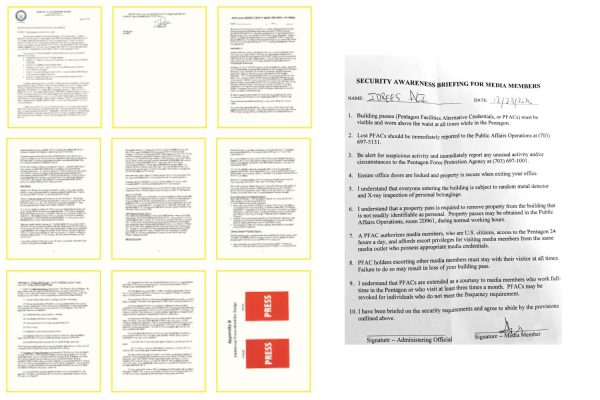
By restricting the press corps, the Pentagon prevents the public from staying informed about the full extent of its actions. Without their Pentagon press passes, journalists are no longer able to go to any United States (US) military base around the world, according to npr.org. When reporters cannot walk the halls of the Pentagon, they lose the chance to gather stories directly from military officials. The loss of media coverage on the reasons for foreign wars allows for the normalization of bipartisan support for these interventions, according to cjr.org. Mr. Badagliacca discussed the balance between the Pentagon wishing to protect their privacy and the peoples’ right to information.
“Both the military and the press have important jobs and serious work to perform in a representative democracy,” Mr. Badagliacca said. “Protection of the American people is probably the most vital role of the federal government. Additionally, it is the right of the people to know about the defense function of the government in a way that is appropriate, balanced, fair, and not injurious to the mission of defense. There has always been tension, but, in the end, the military and the press need each other to carry out their important work.”
Featured Image by Gianna Rodrigues ’27
