
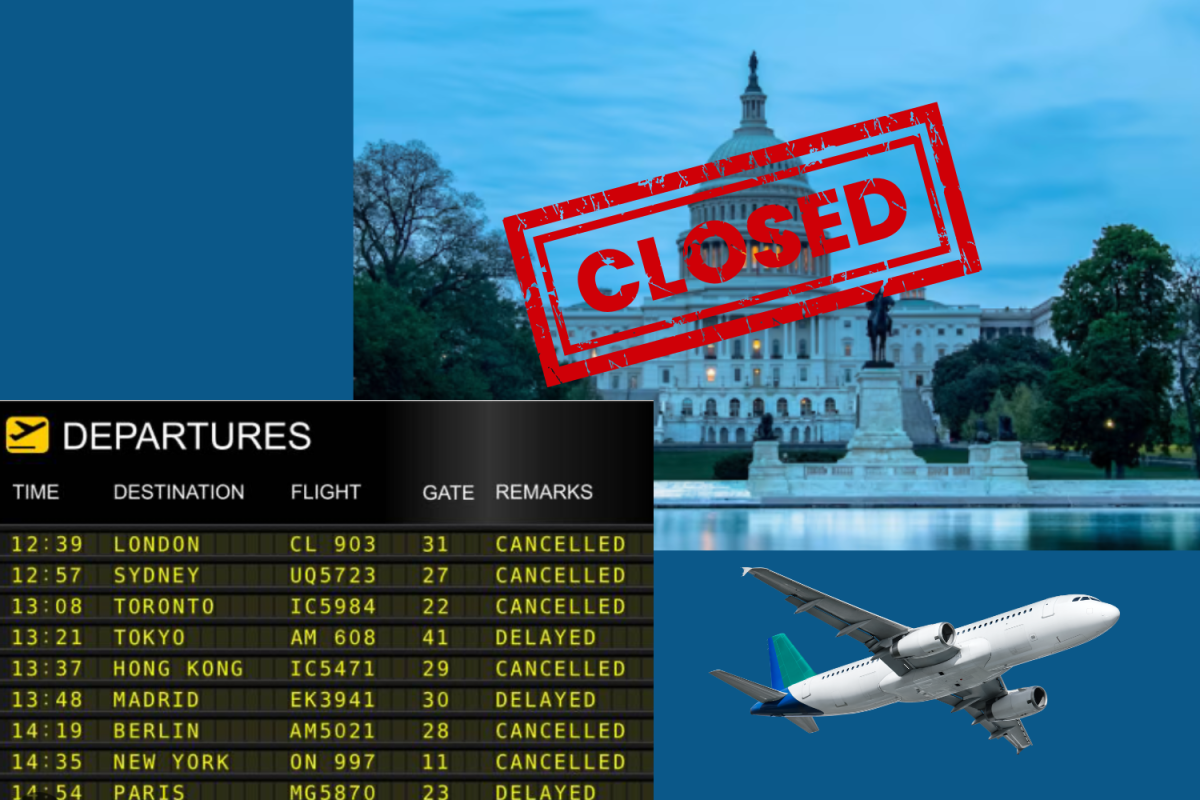
Due to the inability of the Republican and Democratic parties to pass a bill which would continue to fund government services, the United States (US) federal government shut down October 1, according to bbc.com. Despite the governments re-opening November 12, this shutdown resulted in over one million federal employee’s working without pay, according to bbc.com. The limited number of federal employee’s has resulted in several disruptions in the aviation industry, including flight delays and cancellations, according to bbc.com.
Currently, Republicans have legislative control in the House of Representatives, however, in the Upper Chamber, also known as the Senate, Republicans lack sufficient majority, according to bbc.com. The two parties were unable to come to an agreement with a bill funding government services. This led to a government closing that lasted 43 days until the two parties in the Upper Chamber could come to an agreement that President Donald J. Trump signed Wednesday, November 12, according to bbc.com.
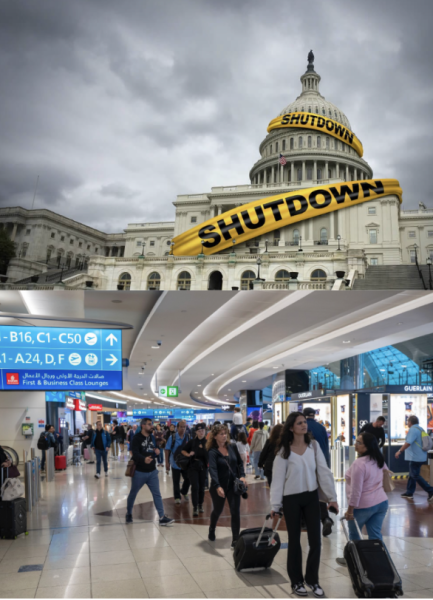
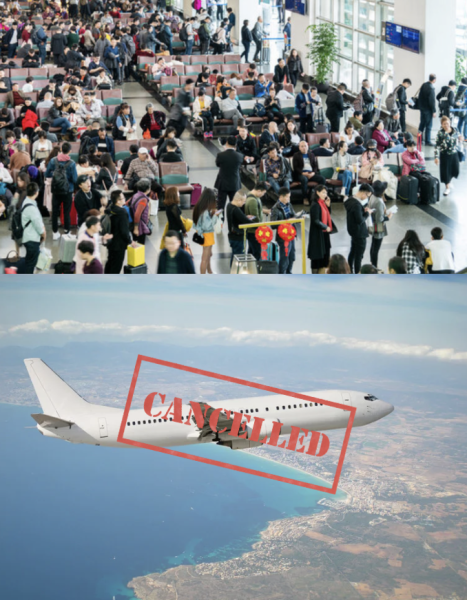
The government shutdown led to a widespread disruption across all airports, as several were significantly understaffed. Travelers were advised to get to the airport earlier because of limited staff for security checks and to manage air traffic, according to bbc.com. The government considers Air Traffic Controllers (ATC) and Transportation Security Administration (TSA) essential workers, and the government requires them to work during a shutdown, according to usatoday.com. Since these workers were without pay for over a month, they struggled to afford to go to work, many struggling to support themselves and their families. Ultimately, having fewer workers affected the aviation industry in a multitude of ways, including the cancellation and delays of many flights across airlines and airports. For example, Friday, November 7, over 5,000 flights were delayed or cancelled, according to bbc.com.
Because of this chaos, the Federal Aviation Administration (FAA) reduced certain airlines flight schedules at 40 major airports by 10 percent, according to apnews.com. Some airports that experienced this were LaGuardia Airport, John F. Kennedy (JFK) International Airport, Miami International Airport, and Los Angeles International Airport, according to apnews.com. Authorities reduced air traffic to mitigate stress for the employee’s and ensure safety, according to npr.org.
The largest airports near Sacred Heart Greenwich were severely impacted during this shutdown. The flight cancellations from LaGuardia, JFK, and Newark Liberty International Airport led to an increase in travelers who were required to fly out of Westchester County Airport. Together, these three major airports had 118 flight cancelations Tuesday, November 10, according to abc7ny.com. Senior Brianna Timlin commented on her airport experience during the government shutdown.
“I had a flight from LaGuardia Airport to St. Louis Lambert International Airport, November 9,” Brianna said. “LaGuardia was fairly calm, and although the flight itself was on time, we sat on the tarmac for two hours after boarding before takeoff due to the long line of planes waiting to depart. Upon arrival in St. Louis, we stayed on the plane for another 30 minutes waiting for a gate. What would typically be a 2.5-hour flight ended up taking five hours.”
Although this shutdown ended November 12, airport operations have still not returned to normal. The impacts from the shutdown will severely disrupt air travel for months or even years, due to the continuing staffing shortage. Moreover, ATC attendance has not instantly recovered, according to CNN. Senator Jerry Morgan commented on how the aviator industry will continue to be disrupted by the shutdown, according to usatoday.com.
“The government shutdown has severely impacted our already fragile aviation industry, and recovering from its effects will take time,” Mr. Morgan said, according to usatoday.com. “As we work to reopen the government, it’s critical that we address the damage done and look at the long-term effects of the shutdown.”
Featured Image by Gray Neville ’27
