


The era in which new actors can easily earn their big break in Hollywood is rapidly fading. The film industry’s growing reliance on constantly casting the same stars reduces film authenticity and makes it harder for audiences to separate an actor’s public persona from their character on screen. While repetitive casting can boost a movie’s popularity through recognizable names, studios often prioritize marketability over role-driven casting, according to redandblack.com. This practice limits opportunities for emerging talent in an industry that includes more than 60,000 actors nationwide, according to bls.gov. Rather than exploring fresh perspectives, directors frequently write roles with specific performers already in mind, which leads to predictable storytelling and reduced creativity. By repeatedly casting the same actors, Hollywood narrows opportunities for new voices but also weakens the originality and impact of modern filmmaking.
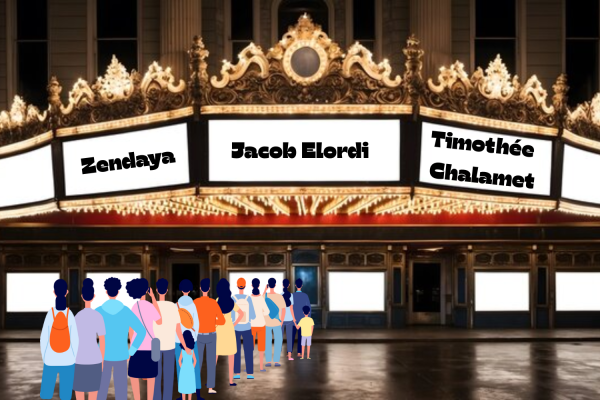
Actor Mr. Jacob Elordi has become a familiar presence in Hollywood over the past several years, according to imbd.com. From his role in The Kissing Booth in 2021 to major productions such as the 2025 Frankenstein film and the upcoming Wuthering Heights, Mr. Elordi’s rising fame has made him a frequent casting choice largely due to his recognizability. Studios use his name to attract larger audiences and help generate revenue for high-budget films. Mr. Elordi began his career in young adult projects, such as The Kissing Booth and the HBO series Euphoria before transitioning into more mature roles in films like Saltburn, Priscilla, and Wuthering Heights, according to imbd.com. As Hollywood continues to cast Mr. Elordi in similar roles, his growing typecasting makes it difficult for audiences to focus on performance over persona, reinforcing the industry’s reliance on familiar faces.
Actress Ms. Zendaya Coleman has remained a prominent figure in the entertainment industry since her teenage years. From starring in Disney Channel’s K.C. Undercover to leading recent films such as Challengers, Ms. Coleman brings a highly recognizable presence that appeals to audiences across multiple age groups. She has built her career around playing strong female leads who challenge traditional, male-centered narratives, such as in Euphoria and some Spider-Man movies, according to gq.com. Although her association with emotionally intense and complex characters is not inherently negative, it can distract viewers from fully immersing themselves in the story. With six projects currently in development, Ms. Coleman’s packed schedule highlights Hollywood’s growing reliance on established stars, further limiting opportunities for lesser-known actors to break into major productions.
Directors also contribute to this practice by repeatedly casting actors with whom they sustain long-standing relationships. These recurring collaborations can result in certain actors securing roles in nearly every project a director produces, leaving little room for fresh casting choices. As a result, creativity slows when directors rely on familiar performers and recycled storylines to match an audience’s expectations, according to koreatimes.co. When audiences closely associate an actor with a certain director’s work, any controversy involving that actor can damage the director’s reputation and the film’s reception. This dependence on repeated collaborations ultimately puts creative innovation and audience trust at risk. Mr. Lord Puttnam is the producer of Chariots of Fire and a former chairman of Columbia Pictures. He discussed the issue with repetitive casting in the industry, according to thetimes.com.
“The problem is it then begins to define you,” Mr. Puttnam said, according to thetimes.com. “Instead of being defined as someone who comes up with interesting movies, which may or may not work, you will be defined as somebody who can reliably do a sequel.”
While Hollywood’s reuse of actors limits casting diversity and contributes to repetitive storytelling, the practice also provides financial and production advantages. Familiar actors bring built-in audiences and reliable performances, which reduces financial risk for studios. Established relationships among actors, directors, and cast members often lead to smoother productions and stronger on-screen chemistry, according to terryknickerbockerstudio.com. Shared casting histories can also help performers deliver more nuanced interactions that resonate with viewers. This familiarity streamlines rehearsals and filming, making production more efficient overall. However, these short-term benefits raise questions about whether consistency and profit should outweigh originality and access to new talent.
Ultimately, Hollywood’s growing reliance on familiar faces reflects an industry caught between financial security and creative risk. While recognizable actors and established collaborations offer short-term stability, they come at the cost of originality, audience immersion, and opportunities for emerging talent. As storytelling becomes increasingly predictable, the film industry risks alienating viewers who seek fresh perspectives and authentic performances. If Hollywood hopes to sustain its cultural significance, the industry must reconsider whether repeating the same stars serves the future of filmmaking or merely preserves its comfort with the familiar.
Featured Image by Gianna Rodrigues ’27
