

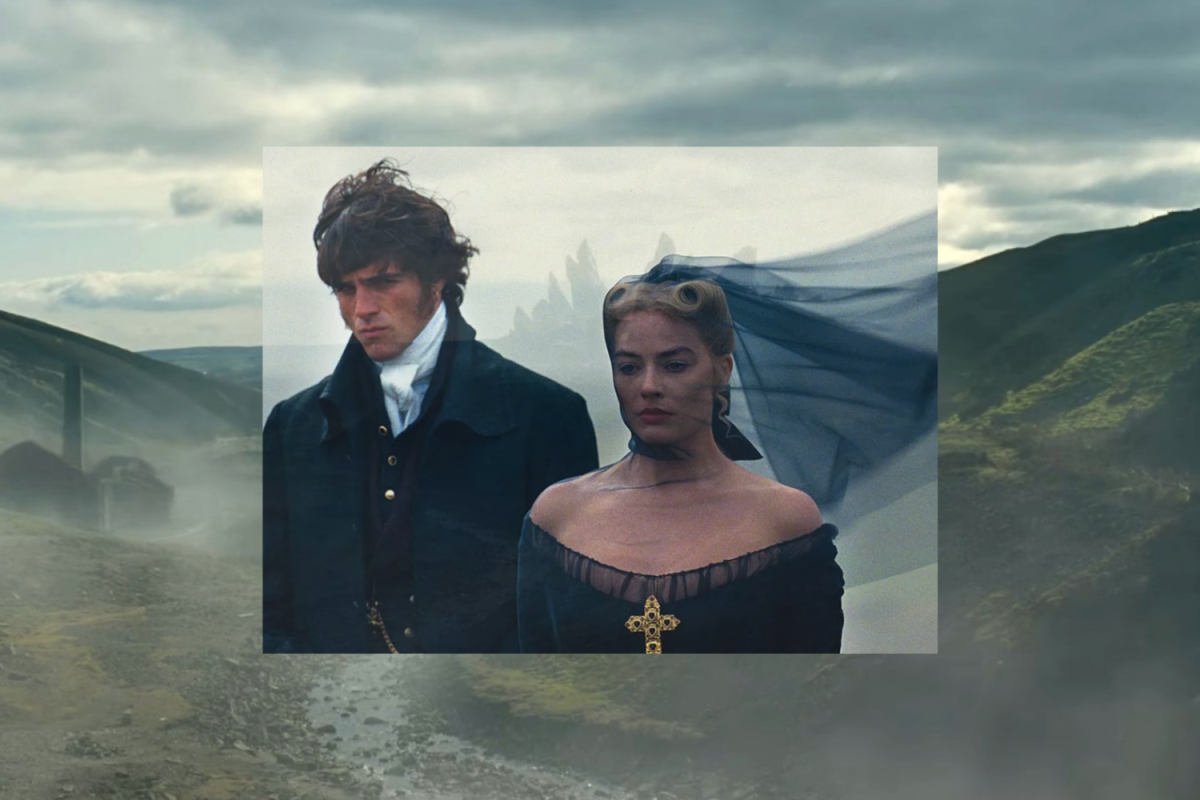
Ms. Emerald Fennell’s film adaptation of Miss Emily Brontë’s novel Wuthering Heights is an intense, emotionally charged, romantic drama that reimagines the classic story in a contemporary way. Through powerful scenery and intense performances, Ms. Fennell transformed the original story while maintaining the emotional themes. The original novel incorporated major themes of love and obsession and social hierarchy. The film came to theaters February 13, 2026, notably lacking portrayals of Miss Brontë’s original theme of social hierarchy and instead focusing on toxic obsession and love.
The film has seen great success so far, grossing significant box office revenue. The film raised $88.5 million worldwide in the early days of opening, according to hollywoodreporter.com. Overall, the film has received mixed reviews. Some have applauded the strong performances and modernized themes, while others have debated whether or not it was a good choice to depart from the novel so significantly.
The main theme of obsession unfolds through the relationship between the protagonists Catherine Earnshaw (Cathy) and Heathcliff. In this adaptation, Ms. Margot Robbie and Mr. Jacob Elordi played the roles of Cathy and Heathcliff. Throughout the film, the characters have deep chemistry, which takes the audience on an emotional rollercoaster. Their lifelong bond and inseparability since childhood deepens the emotional impact of their connection. Ms. Robbie discussed the intense emotion and female desire she embodied in the film.
“The ironic thing is that we’ve fought so hard to not have to do that in movies anymore, but now its been so long since — I don’t know if I’ve done a scene like this since I was on the soap opera I was on back in Australia when I was a teenager,” Ms. Robbie said, according to refinery29.com. “It felt so radical to just be to women fighting over a man.”
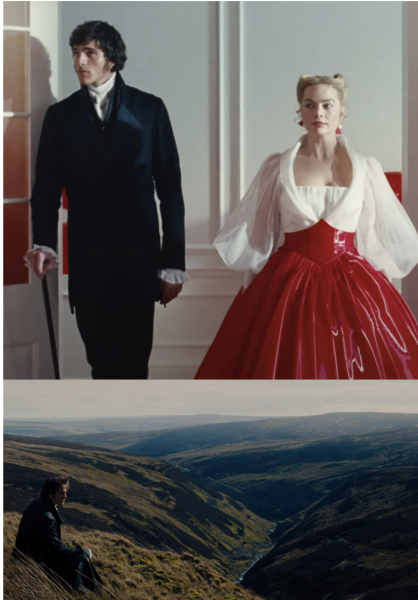
In addition to the powerful performances, the scenery contributes to the emotional atmosphere of the film. The setting of Cathy’s childhood home is gloomy and often stormy, illustrating the internal turmoil the characters faced there. The moors represent a place for the two protagonists to escape the chaos, and this setting is significant because it was where Cathy and Heathcliff formed their deep connection. When Cathy marries the wealthy Edgar Linton, the scenery changes immensely. His home is portrayed as orderly, illustrating the strict expectations in the household. Although the setting appears stable, it contrasts with Cathy and Heathcliff’s deeply emotional relationship.
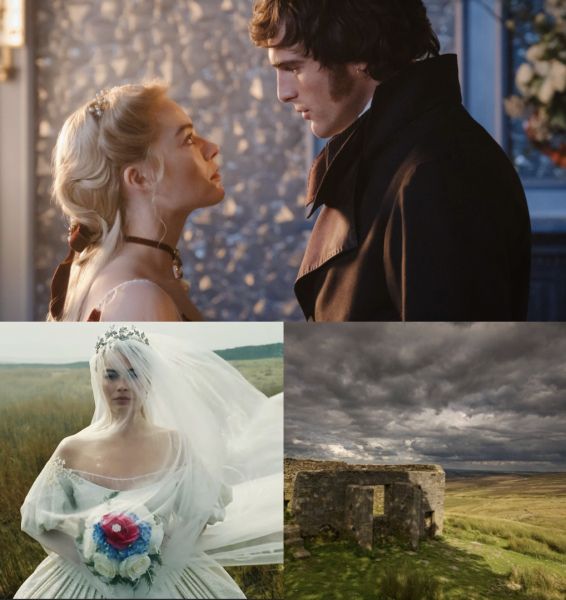
The ending of the film was a key change from the novel since it ended only halfway through the novel. By stopping at this point, the adaptation primarily focuses on the unstable relationship between Cathy and Heathcliff. This choice also makes a more dramatic ending, but this also means that the viewers who are unfamiliar with the book may not realize that the story continues beyond this point. While this choice of ending allows for a possible sequel, critics had mixed opinions on the ending. Some critics enjoyed the emotional intensity while others felt that the film’s ending should have aligned with the novel.
Ultimately, Miss Brontë’s Wuthering Heights demonstrates how obsession can consume individuals, a theme that Ms. Fennell amplified with the use of landscape and performances. Some scenes portray violent interactions between Cathy and Heathcliff that are not included in the original novel. Simultaneously, the adaptation leaves out several plot elements and characters, including Cathy and Heathcliff’s daughter. As a result, the new film adaptation does not align closely with the storyline of the original work. Ms. Fennell discusses her reasoning behind the ending of the film.
“It begins where it ends and ends where it begins,” Ms. Fennell said, according to ew.com. “And that’s the thing about love, and it’s the thing about the book, right? It’s that it’s forever and it’s cyclical, and so there’s no stop — even when there’s a terrible, sad, tragic stop, it’s not really a stop — because that’s what the book feels so much about.”
Featured Image by Gray Neville ’27
